
Climbing, Cruising and Descending could be a hard task when you start doing it relying only on your flight instruments, that’s why I’m writing this blog post right now. to help you and other student pilots to perform these maneuvers even under stress.
Climbing, cruising, and descending on instruments refers to the procedures used by pilots flying under Instrument Flight Rules (IFR), where flight is conducted primarily by reference to cockpit instruments rather than visual cues.
These procedures are vital in poor weather conditions or in controlled airspace where pilots rely on instruments for navigation, altitude management, and maintaining safe flight parameters.
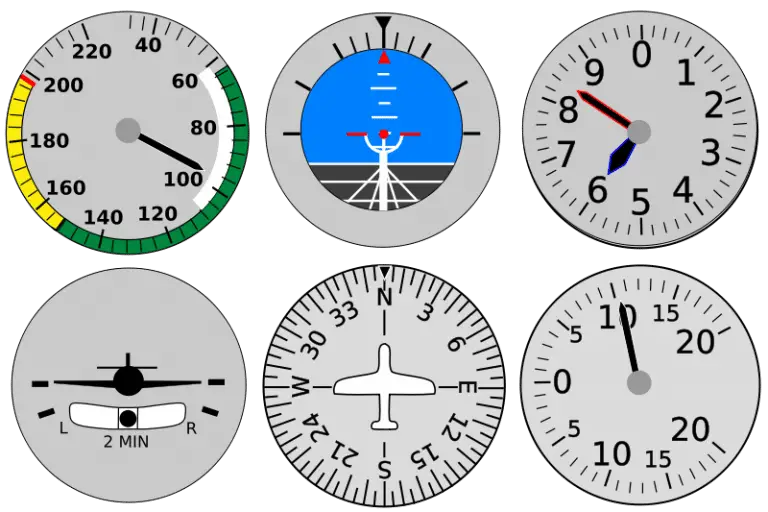
key techniques for each phase of flight when flying on instruments
Climbing on Instruments
During an instrument climb, the goal is to maintain a consistent attitude, airspeed, and heading as you ascend to your assigned altitude.
Procedure:
- Set the correct pitch: Use the attitude indicator to establish the pitch attitude required for your desired climb rate. The exact pitch varies based on the aircraft, but typically a small nose-up attitude is maintained.
- Monitor the vertical speed indicator (VSI): This instrument helps you track your rate of climb. Aim for a steady, controlled rate of climb without large fluctuations.
- Maintain airspeed: Use the airspeed indicator to ensure you are climbing at the recommended climb speed (Vy or cruise climb speed). Adjust the pitch slightly to maintain the correct airspeed.
- Use the heading indicator: Stay on the assigned heading by referencing the heading indicator and directional gyro. Avoid large heading deviations while focusing on climb performance.
- Cross-check instruments: Regularly scan all instruments, including the altimeter (to monitor altitude), turn coordinator, and artificial horizon, to ensure you’re maintaining a coordinated climb.
- Communicate with ATC: If under IFR, ATC will typically assign your climb altitude. Stay in contact, confirm instructions, and report reaching any assigned altitude levels.
Challenges:
- Spatial disorientation: In poor visibility or cloudy conditions, you may feel disoriented, but trust the instruments, as relying on visual cues can lead to errors in attitude or heading.
- Power management: In a climb, ensure that engine power is set correctly for the climb. In high-performance or turbine aircraft, adjust engine power to avoid exceeding temperature or power limits.

Cruising on Instruments
The cruise phase of flight involves maintaining a stable altitude, heading, and airspeed over longer periods. Instrument flying in cruise primarily focuses on maintaining accurate altitude and heading while monitoring for potential changes in conditions or ATC instructions.
Procedure:
- Maintain straight and level flight: Use the attitude indicator to maintain a neutral pitch and roll. The artificial horizon will help you keep the wings level and maintain altitude.
- Altitude control: The altimeter is the primary instrument for altitude control. Once in level flight, make fine pitch adjustments to hold the assigned altitude.
- Use the vertical speed indicator (VSI) to ensure that you are neither climbing nor descending.
- Adjust power settings and trim the aircraft as needed to maintain altitude without constant control input.
- Monitor heading: The heading indicator (or HSI) is used to maintain your assigned heading. Correct for wind drift and adjust heading as directed by ATC.
- Cross-check navigation instruments: Depending on the phase of flight, use your navigation instruments (VOR, GPS, or other navaids) to ensure you are on the correct flight path.
- Scan for traffic and monitor weather: While primarily relying on instruments, keep an eye on weather changes, traffic advisories from ATC, and any potential hazards on your route.
- Communicate with ATC: Remain in contact with air traffic control for updates on airspace, traffic, and any altitude changes or clearances. ATC will provide altitude and course changes as necessary.
Challenges:
- Complacency: In long cruise phases, pilots may become less vigilant in scanning instruments. It’s essential to maintain a regular instrument scan to avoid deviations.
- Changing weather: Be aware of changing weather conditions, such as turbulence or icing, that can affect altitude or speed control.
for more details click here and learn How to Fly Straight and Level on Instruments
Descending on Instruments
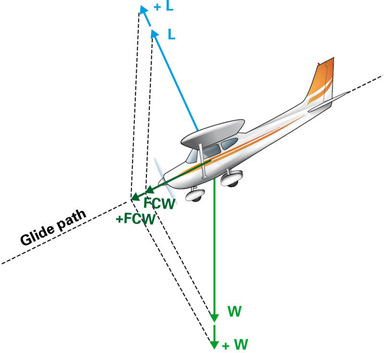
Descending on instruments requires precision, as you need to ensure a safe rate of descent while adhering to assigned altitudes and airspace restrictions.
Procedure:
- Set a descent rate: Use the vertical speed indicator (VSI) to establish a controlled rate of descent, typically between 500-1000 feet per minute (fpm), unless ATC assigns a specific rate.
- Reduce power: To descend, reduce engine power while maintaining a level pitch attitude until the descent rate is established.
- Monitor airspeed: As you descend, the reduced altitude will naturally increase your airspeed. Monitor the airspeed indicator and adjust pitch or power to prevent overspeeding.
- Cross-check instruments:
- Regularly check the attitude indicator to ensure you’re maintaining the correct descent angle and pitch attitude.
- Keep an eye on the heading indicator to maintain the assigned heading during descent. If making a descent on a specific radial or course, ensure the navigation instruments are properly tuned and followed.
- Leveling off: As you approach the assigned altitude, reduce the rate of descent by raising the nose slightly and adding power. Use the altimeter to level off exactly at the desired altitude.
- Communicate with ATC: Confirm altitude and headings with ATC as needed, and report reaching assigned altitudes.
Challenges:
- Turbulence: Turbulence during descent can make it difficult to maintain a steady descent rate. Use smoother, smaller control inputs to avoid overcorrection.
- Excessive speed: Descents tend to increase airspeed unless controlled properly. Be cautious of your speed limits, particularly if descending from high altitudes.
Instrument Scanning Techniques
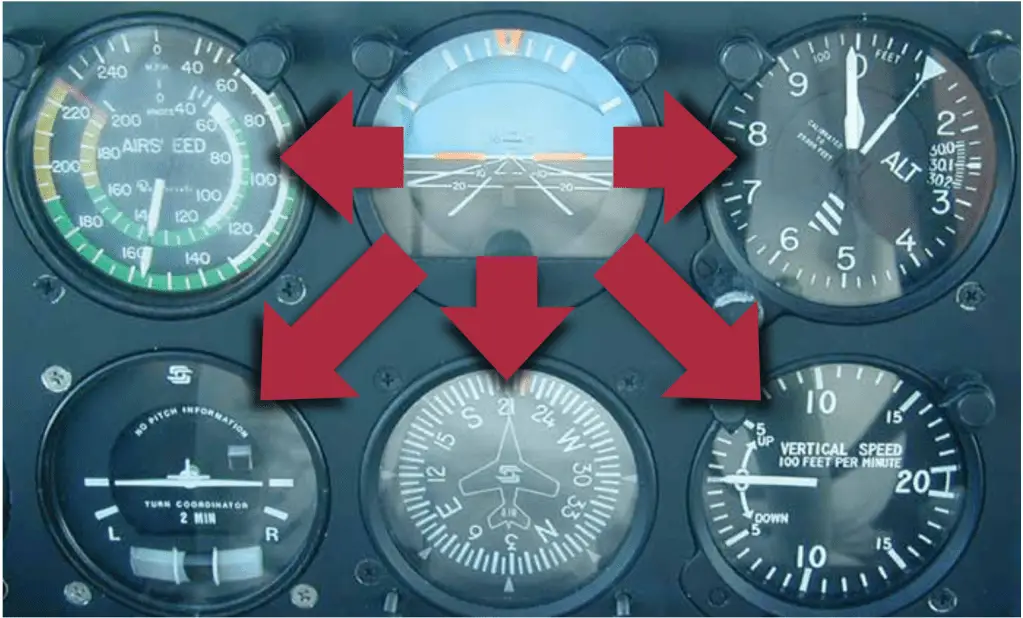
Effective instrument flying relies heavily on instrument scanning. The pilot must constantly scan the cockpit instruments in a systematic and organized way to ensure accuracy in flight. There are several common scanning techniques:
- Radial scan: Focus primarily on the attitude indicator (center of the scan) and periodically scan out to other instruments like the heading indicator, altimeter, VSI, airspeed indicator, and turn coordinator.
- Hub and spoke scan: Begin with the attitude indicator and then move out to each instrument, one at a time, returning to the attitude indicator after each.
- Inverted-V scan: A scan focused on the attitude indicator, with regular cross-checks between the airspeed indicator and altimeter in a V-shaped pattern.
If you are interested you should read about Ditching in Water
FAQs
1. What does climbing, cruising, and descending on instruments mean?
It refers to managing altitude changes during flight using cockpit instruments, such as the attitude indicator, altimeter, and vertical speed indicator, instead of visual references.
2. Why is instrument-based altitude management important?
Instrument flying is essential in low-visibility conditions, ensuring pilots can safely climb, maintain altitude, or descend while adhering to flight paths, avoiding obstacles, and maintaining separation from other aircraft.
3. What are the primary instruments used for altitude management?
- Attitude Indicator: Displays pitch and bank for climb and descent.
- Altimeter: Shows current altitude.
- Vertical Speed Indicator (VSI): Indicates rate of climb or descent.
- Airspeed Indicator: Monitors speed, critical for safe altitude transitions.
4. How do you perform a climb using instruments?
- Set the desired pitch attitude on the attitude indicator.
- Monitor the airspeed indicator to maintain an optimal climb speed.
- Adjust power to climb power settings.
- Cross-check the altimeter and VSI to track progress.
5. What is a cruise climb?
A cruise climb prioritizes efficiency, balancing fuel consumption and speed while gaining altitude. It’s less steep than a maximum-performance climb and ideal for long flights.
6. What are the risks of climbing too steeply on instruments?
Excessive pitch can lead to a loss of airspeed, potentially causing a stall. Instrument monitoring ensures the pitch remains within safe limits.
7. How do you maintain level flight at cruise altitude?
- Use the attitude indicator to maintain level pitch.
- Monitor the altimeter for altitude deviations.
- Adjust power to cruise settings.
- Continuously cross-check instruments to ensure a stable flight path.
8. Why is the altimeter crucial during cruise?
The altimeter ensures the aircraft remains at the assigned altitude, avoiding conflicts with other aircraft and complying with air traffic control (ATC) instructions.
9. What is “cruise speed” and why is it important?
Cruise speed is the optimal airspeed at level flight, balancing fuel efficiency and time. It’s maintained using power settings, pitch adjustments, and continuous monitoring.
10. How do you initiate a descent using instruments?
- Reduce power to descent settings.
- Lower the nose slightly, monitoring the attitude indicator.
- Track the VSI to achieve the desired descent rate.
- Maintain proper airspeed throughout the descent.
11. What is the standard descent rate in IFR conditions?
A common descent rate is 500-1,000 feet per minute (fpm), balancing comfort and efficiency. ATC instructions may dictate specific rates during approach.
12. How do you calculate a descent profile?
To calculate when to start your descent:
- Multiply the altitude to lose by 3 (e.g., 6,000 feet × 3 = 18 nautical miles).
- Use a VSI setting matching the descent rate (e.g., 500 fpm for gradual descents).
13. What role does the airspeed indicator play during descent?
It ensures the aircraft remains within safe operating speeds. Excessive descent speeds can lead to structural stress or overspeed warnings.
14. What are the risks of descending too quickly?
- Loss of situational awareness.
- Passenger discomfort due to rapid pressure changes.
- Exceeding safe airspeed limits.
15. How do you manage descents in turbulent conditions?
Reduce airspeed to turbulence penetration speed and use smaller, smoother control inputs to maintain stability and instrument accuracy.
16. What is the significance of the VSI during climbs and descents?
The VSI provides real-time feedback on the rate of altitude change, helping pilots maintain desired climb or descent rates and avoid overshooting.
17. How do pilots transition between climb, cruise, and descent?
- Climb to Cruise: Gradually reduce power, level off, and adjust pitch for stable flight.
- Cruise to Descent: Reduce power, adjust pitch down, and monitor VSI and airspeed for a controlled descent.
18. What is the role of ATC during climbs and descents?
ATC provides clearances and altitude assignments, ensuring safe separation from other aircraft and guiding pilots through controlled airspace.
19. What is the impact of weight on climb performance?
Heavier aircraft require more power and longer distances to climb, reducing climb rates and increasing fuel consumption.
20. How do you correct an altitude deviation during cruise?
- Identify the deviation using the altimeter.
- Adjust pitch slightly using the attitude indicator.
- Add or reduce power as needed to stabilize.
21. What is a stabilized descent?
A stabilized descent maintains a constant rate of descent, speed, and heading, crucial for approaches and landing.
22. What are common errors during climbs, cruises, and descents?
- Over-controlling the aircraft.
- Neglecting cross-checks of instruments.
- Improper power settings.
- Failure to anticipate level-off points.
23. How do autopilots assist with altitude management?
Autopilots can automatically manage climbs, level flight, and descents by maintaining programmed pitch, power, and altitude settings, reducing pilot workload.
24. What training exercises help pilots master instrument altitude management?
- Simulated climbs and descents in a flight simulator.
- Practice with an instructor under a view-limiting device.
- Timed climbs and descents to specific altitudes.

 Aviator Tells
Leave a comment