
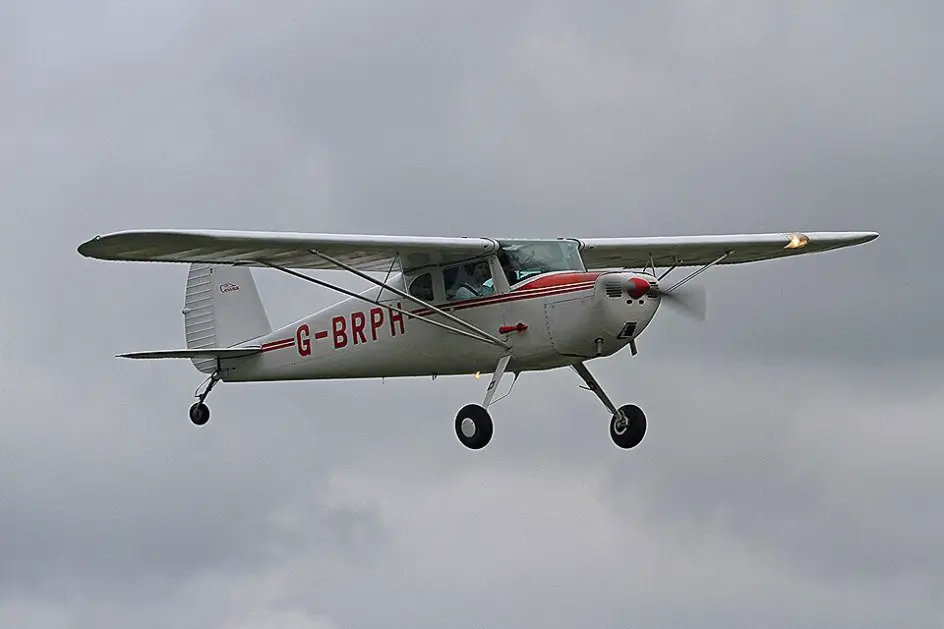
A simple, fabric-covered airplane with two seats parked side-by-side bobbles its way down a runway, its slender tires barely kissing the earth before it climbs back into the sky. This is the Cessna 120, an aircraft born not of complex engineering or corporate ambition, but of pure, unadulterated necessity.
In the aftermath of World War II, as thousands of trained pilots returned home with a newfound love of flight, Cessna answered the call with a machine of breathtaking simplicity and affordability. It was the everyman’s aircraft, a Ford Model T for the skies, designed to put the joy and freedom of flight within reach of the average person.
What is the Cessna 120?
The Cessna 120 is a light, two-seat, high-wing, fixed-tailwheel aircraft produced by Cessna Aircraft Company between 1946 and 1949. It was part of a two-model strategy that included its slightly more refined sibling, the Cessna 140. Designed in the immediate post-war era, the 120 was a study in minimalism, stripping away any feature deemed non-essential to achieve the lowest possible price point. With its fabric-covered wings and fuselage, simple metal tube frame, and a dependable Continental engine, the 120 was marketed as an “economy” model, offering pure, basic transportation for the fledgling private pilot. It lacks the electrical system and starter that its 140 sibling possesses, requiring a manual prop swing to come to life, a ritual that connects the pilot directly to aviation’s earliest days.
Don’t fly it unless you have your Cessna 120 Checklist
The Post-War Aviation Boom
To understand the Cessna 120 is to understand the era of its birth. The end of World War II created a perfect storm for general aviation. Surplus military aircraft were available, but they were often too large, complex, or expensive for personal use. More importantly, a massive pool of returning servicemen had been exposed to flying and wanted to continue their aerial adventures in civilian life.
Cessna 120 Specifications
- Airframe: A welded steel tube fuselage covered in fabric, with aluminum alloy wings.
- Engine: A 85-horsepower Continental C-85 flat-four piston engine.
- Propeller: A fixed-pitch, wooden propeller.
- Landing Gear: A conventional “taildragger” configuration, meaning it has two main wheels forward of the center of gravity and a small wheel at the tail.
- Systems: Notably simple. No electrical system, no starter, no lights, and minimal instrumentation. Fuel is managed through a simple gravity-fed system with a tank in the upper wing center section.
Performance Figures:
- Cruise Speed: Approximately 95-100 knots (110-115 mph).
- Stall Speed: Around 39 knots (45 mph).
- Rate of Climb: ~500 feet per minute.
- Service Ceiling: 15,000 feet.
- Range: Approximately 400 nautical miles (460 miles).
These modest numbers are the key to its charm. The 120 is not about going fast or high; it’s about the pure, slow, and low experience of flight, where the journey is truly the destination.
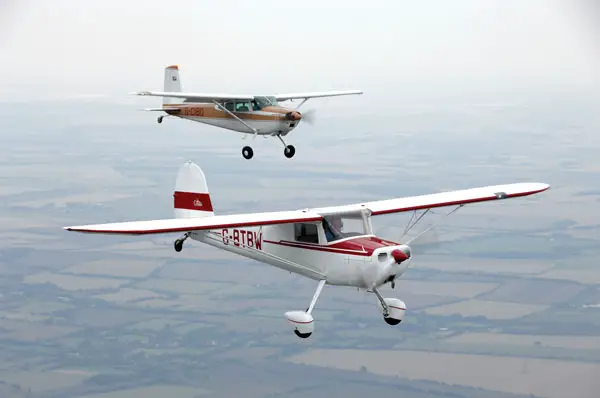
Cessna 120 vs. Cessna 140
| Feature | Cessna 120 | Cessna 140 |
|---|---|---|
| Flaps | None | Equipped with wing flaps |
| Starter & Electrical System | None (Hand-propped only) | Standard (Battery, starter, generator) |
| Interior | Very basic | More refined, better upholstery |
| Price (1946) | $2,495 | $3,465 |
The absence of flaps on the 120 is its most significant performance difference. Pilots must rely on slips and forward planning to manage energy and descend without the aid of flaps.
The lack of an electrical system makes it lighter, simpler, and cheaper, but also limits it to day-only, Visual Flight Rules (VFR) operations. The 140, with its flaps and starter, was the more practical and popular choice for many, but the 120 holds a special place as the purist’s option.
The Restoration and Ownership Experience Today
Today, the Cessna 120 is a beloved classic, cherished by restorers and vintage aircraft enthusiasts.
- Acquisition Cost: A flyable Cessna 120 can be found for $15,000 to $30,000, making it one of the most accessible vintage aircraft to own.
- Maintenance: The simple systems are a blessing for owners. The airframe’s fabric covering, however, has a finite lifespan (typically around 20-30 years) and recovering it is a major, costly undertaking. Finding mechanics familiar with fabric work and vintage engines is key.
Cessna 120 FAQs
1. Is the Cessna 120 a good plane for a beginner to learn in?
It can be, but with significant caveats. It teaches outstanding stick-and-rudder skills and forces a pilot to understand energy management without the aid of flaps. However, learning in a taildragger is more challenging than in a tricycle-gear aircraft like a Cessna 172. The lack of an electrical system also means you cannot practice radio work or instrument procedures.
2. What are the biggest challenges of flying a taildragger like the 120?
Ground handling is the primary challenge. The “ground loop”, an uncontrolled pivot, is a constant risk if the pilot is not diligent about keeping the aircraft perfectly straight during takeoff and landing, especially in crosswinds.
3. Can a Cessna 120 be modified with an electrical system?
Yes, many 120s have been modified with aftermarket electrical systems and starters, often using parts from Cessna 140s. This is a popular modification that adds significant convenience but moves the aircraft away from its pure, original form.
4. How much does it cost to restore a Cessna 120?
A full restoration, including a new fabric cover and engine overhaul, can easily cost $30,000 to $50,000 or more, often exceeding the aircraft’s market value. It is a labor of love, not an investment for financial gain.
5. Is it difficult to find parts for a Cessna 120?
No, it is surprisingly easy. Due to the active and dedicated owner community and the parts commonality with the more numerous Cessna 140, a robust network of suppliers and salvagers exists. Most mechanical parts are still readily available.
6. Why would someone choose a 120 over a 140 today?
For a vintage aircraft purist, the 120’s utter simplicity is the appeal. It is the lighter, more basic, and therefore slightly more sprightly performer of the two. It represents the absolute core of the design, untouched by even the modest additions of the 140.
7. What is it like to fly without flaps?
It requires more forward planning. To lose altitude, a pilot must either reduce power early or use forward slips, a maneuver where the pilot uses opposite aileron and rudder to increase drag and descent rate without gaining airspeed. It’s a fundamental skill that makes one a more proficient pilot.
 Aviator Tells
Leave a comment