
The Piper M700 FURY is the most powerful and fastest single-engine turboprop ever produced by Piper Aircraft. It is a direct, power-focused evolution of the Piper M600, distinguished by a significant engine upgrade that boosts output from 600 to 700 shaft horsepower. This increase transforms the aircraft’s performance, particularly in its climb rate and time-to-climb metrics, while pushing its maximum cruise speed to new heights.
It retains the sophisticated Garmin G3000 avionics suite and the optional, revolutionary HALO safety system from its predecessor but wraps them around an airframe and powerplant combination designed for one purpose: dominant performance.
The Genesis of Fury: From M600 to M700
The M700’s story is one of focused evolution. Piper took the highly successful and robust M600 airframe, a platform already known for its strength and speed, and asked a simple but profound question: What if we gave it more power? The answer was the FURY.
This was not merely a matter of turning up the boost on the existing engine. The M700 is powered by a Pratt & Whitney PT6A-52 engine, a variant selected specifically for its ability to reliably and sustainably deliver 700 shp. This required ensuring the entire drivetrain, including the propeller and engine mounts, was up to the task.
The airframe, already strengthened for the M600, was more than capable, proving the inherent robustness and forward-thinking design of the PA-46 lineage. The M700 is the culmination of this philosophy, representing the maximum expression of power and speed within the existing structural and aerodynamic framework.
Get the new 2026 FAR/AIM Handbook “click here“
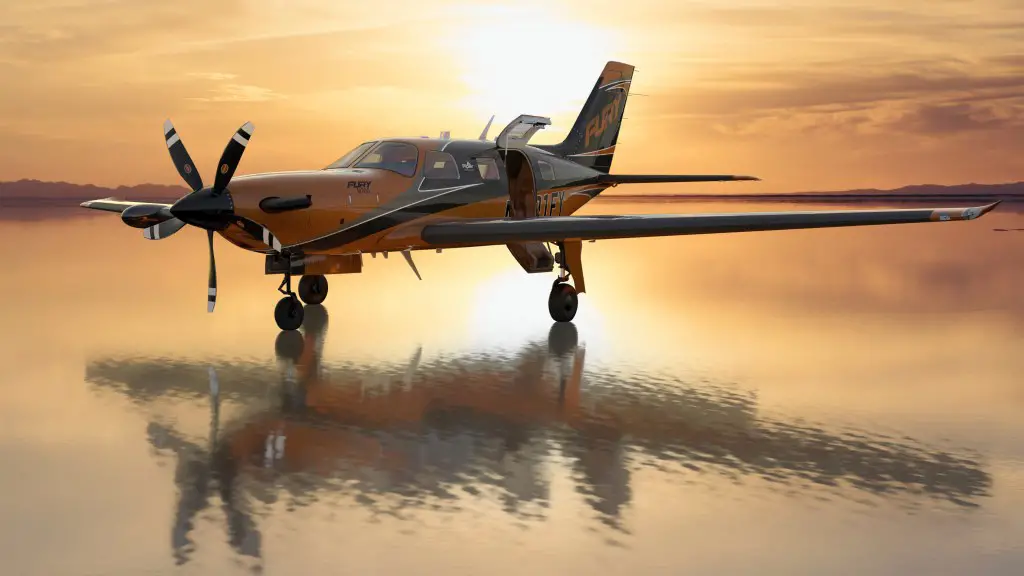
Piper M700 FURY Specs
The raw numbers of the M700 FURY tell a compelling story of a performance leap.
- Airframe: The proven, all-metal, low-wing PA-46 airframe, certified for the increased power and performance.
- Engine: Pratt & Whitney Canada PT6A-52 turboprop, delivering 700 shp.
- Propeller: A durable, four-bladed, constant-speed, reversible propeller designed to handle the increased torque and convert the power into thrust efficiently.
- Pressurization System: Maintains a comfortable cabin altitude while the aircraft operates at its maximum certified altitude.
Performance Figures:
- Max Cruise Speed: 301 knots (346 mph), making it the fastest single-engine turboprop in its class and pushing it decisively past the 300-knot psychological barrier.
- Stall Speed: Approximately 70 knots (80 mph).
- Rate of Climb: An astounding 2,263 feet per minute. This is over 400 fpm faster than the already-impressive M600, allowing the M700 to reach its initial cruise altitude in a fraction of the time.
- Service Ceiling: 31,000 feet.
- Maximum Range: Approximately 1,424 nautical miles (with reserves), a slight adjustment from the M600 due to the higher power settings, but still offering impressive transcontinental reach.
- Useful Load: Over 1,800 lbs, maintaining the excellent payload capability of the platform.
The most dramatic differentiator is the climb performance. The ability to climb at over 2,200 fpm means the M700 can get above weather and into smooth, efficient air more quickly than virtually any other aircraft in its category, saving time and fuel on nearly every mission.
M700 Fury Avionics
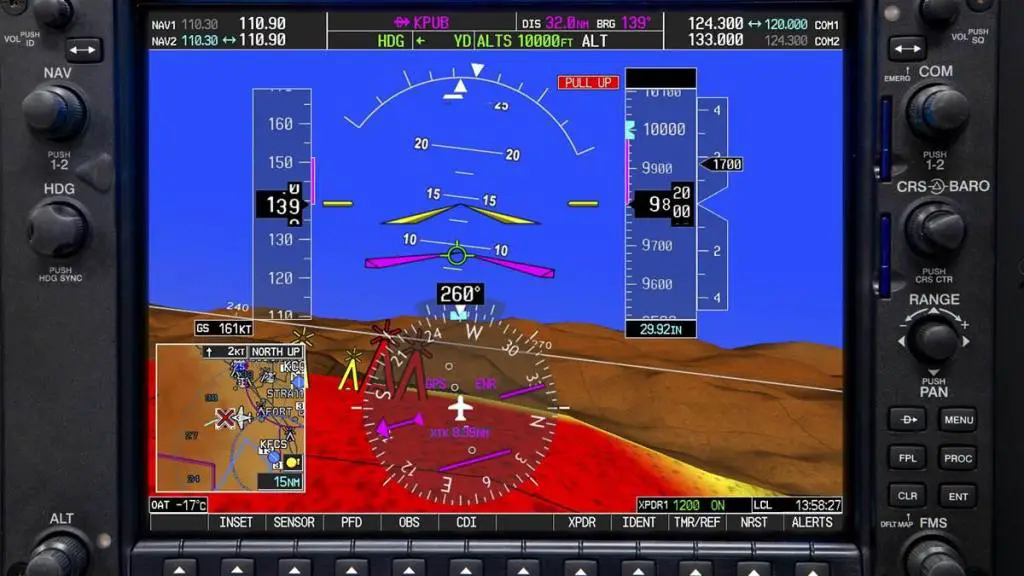
The immense power of the M700 is managed through one of the most advanced avionics suites in the sky: the Garmin G3000. This fully integrated glass cockpit provides the pilot with unparalleled situational awareness through high-resolution touchscreen displays, synthetic vision, advanced flight management, and seamless datalink weather and traffic.
Critically, the M700 also offers the groundbreaking HALO Safety System. This suite of automated features is especially relevant in such a high-performance aircraft. It includes:
- SafeReturn: An emergency autoland system capable of taking control, navigating to the nearest suitable airport, and executing a landing in the event of pilot incapacitation.
- Automatic Emergency Descent: Triggers an immediate descent to a safe altitude in case of cabin depressurization.
- Envelope Protection: Helps prevent the pilot from exceeding structural or aerodynamic limits.
In a machine with the performance of the M700, HALO acts as an intelligent co-pilot, providing a critical safety net that enhances single-pilot operational confidence.
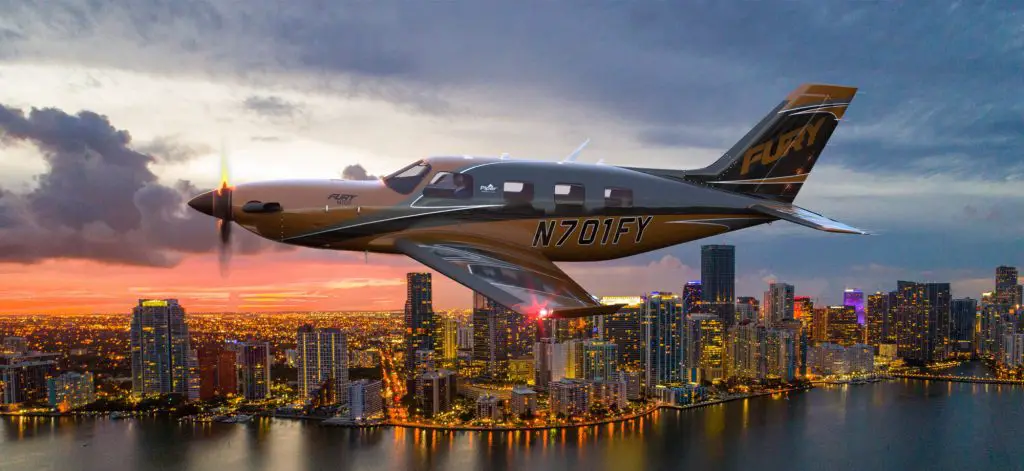
Piper M700 Price
Operating at the pinnacle of performance commands a premium. The M700 FURY represents a significant investment in capability.
- Acquisition Cost: Positioned above the M600, the M700 commands a higher price point, reflecting its superior engine and class-leading performance.
- Operating Costs: The 700 shp engine will have a higher fuel flow than the 600 shp version when operated at high-power settings. Maintenance costs for the PT6A-52 are consistent with the PT6 family’s predictable maintenance schedules, though potentially at a slightly higher cost due to the engine’s larger size and power output.
- Pilot Profile: The M700 is intended for the most proficient and experienced turboprop pilots. Managing its exceptional performance, especially during climb and descent, requires sharp energy management skills and a thorough understanding of high-performance aircraft systems.
The M700’s Unchallenged Position
The M700 FURY enters a market where it has effectively created its own niche.
- Vs. Piper M600: The M700’s most direct comparison is with its stablemate. The choice is simple: the M600 offers exceptional performance, while the M700 offers top-of-the-line, class-leading speed and climb for those who require the absolute maximum capability and are willing to pay for it.
- Vs. Daher TBM 960: The TBM 960 has long been a benchmark for speed. The M700 FURY now matches or exceeds this benchmark in several key performance areas, particularly climb rate, while offering a competitive cabin experience and the unique HALO safety option.
- Vs. Pilatus PC-12 NGX: The PC-12 continues to compete on a different value proposition: massive cabin space and utility. The M700 FURY does not attempt to compete on volume; it dominates on pure speed and climb performance, appealing to an operator whose primary metric is time-to-destination.
Piper M700 FURY FAQs
1. What is the single most significant improvement in the M700 over the M600?
The increase in horsepower from 600 shp to 700 shp. This is the engine change that directly enables the dramatic improvement in climb performance and the increase in top cruise speed.
2. Is the airframe of the M700 different from the M600?
The fundamental airframe is the same proven PA-46 structure, which was already certified for high stresses. The changes are in the powerplant and associated systems needed to handle the additional 100 horsepower, not a wholesale redesign.
3. With such high performance, is the M700 more difficult to fly?
It requires a high level of pilot proficiency. The faster climb and cruise speeds mean everything happens more quickly, and energy management is even more critical. However, the advanced G3000 avionics and optional HALO system are designed to help manage this complexity and maintain safety.
4. What kind of real-world time savings does the M700 offer?
On a typical 500-nautical-mile trip, the combination of a faster climb and a higher cruise speed could save 10-15 minutes compared to the M600. For a business aircraft that flies hundreds of hours a year, these savings accumulate significantly.
5. Is the useful load affected by the more powerful engine?
Piper has managed to maintain an excellent useful load on the M700, keeping it competitive with and even superior to some rivals. The airframe’s inherent payload capability allows it to absorb the weight of the more powerful engine without a significant penalty.

 Aviator Tells
Leave a comment