
The Piper M500 is a single-engine turboprop aircraft and a direct evolution of the Piper PA-46 Malibu/Mirage lineage. It is essentially the airframe of the piston-powered Piper M350, re-engineered and strengthened to be powered by a Pratt & Whitney Canada PT6A-42A turbine engine, producing 500 shaft horsepower.
This transformation results in an aircraft that retains the comfortable, pressurized cabin of its piston sibling but delivers vastly superior climb performance, higher cruise speeds, and the renowned reliability of a turbine engine. It sits strategically in Piper’s lineup between the piston M350 and the more powerful, larger-cabin M600, offering a compelling entry point into turbine ownership and operation.
An Engine of Transformation: From Piston to Turbine Power
The story of the M500 is the story of its engine. While its airframe shares a common ancestry with the Malibu, the replacement of the piston engine with a Pratt & Whitney PT6A represents a fundamental philosophical shift.
The original concept was proven with the Piper PA-46-500TP Malibu Meridian, which debuted in the early 2000s. The M500 is the direct descendant and refinement of this pioneering model. Piper took the lessons learned from years of Meridian operation and created the M500 with numerous system improvements and updates, particularly in its avionics suite.
The key advantage of the PT6A engine is its power-to-weight ratio and mechanical simplicity compared to a high-strung, turbocharged piston engine. It runs on Jet-A fuel, which is more readily available and often cheaper than avgas in many parts of the world. It also offers smoother operation, superior high-altitude performance, and a legendary reputation for durability that translates into greater dispatch reliability for business travelers.
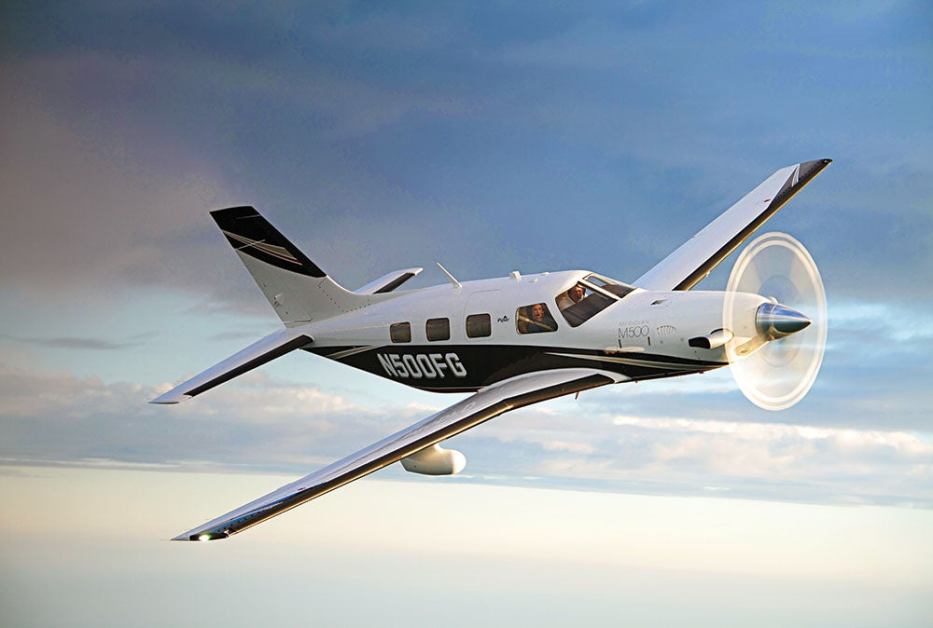
Piper M500 Specifications
The infusion of turbine power transforms the aircraft’s performance envelope, particularly in its climb phase.
- Airframe: Robust, all-metal, low-wing design, derived from the Malibu but structurally reinforced to handle the turbine engine’s power and torque.
- Engine: Pratt & Whitney Canada PT6A-42A turboprop, 500 shp.
- Propeller: Four-bladed, Hartzell constant-speed, reversible propeller. The reverser dramatically shortens landing roll distances and enhances ground handling.
- Pressurization System: Maintains a comfortable cabin altitude of 6,600 feet while flying at its maximum operating altitude.
Performance Figures:
- Max Cruise Speed: 260 knots (300 mph) at 25,000 feet.
- Stall Speed: 68 knots (78 mph).
- Rate of Climb: An impressive 1,630 feet per minute – a significant boost over its piston counterparts.
- Service Ceiling: 30,000 feet, allowing it to fly above more weather systems.
- Maximum Range: Approximately 1,200 nautical miles (with reserves).
- Useful Load: Over 1,600 lbs, providing excellent flexibility for passengers, fuel, and baggage.
The performance story is clear: the M500 climbs faster to a higher altitude, cruises faster, and offers the rugged reliability of a turbine, all while retaining the familiar and comfortable cabin of the PA-46 platform.
Operational Advantages of the M500
The M500’s turbine power translates into tangible benefits for owners and operators:
- Hot and High Performance: The PT6 engine is largely unaffected by high density altitudes. The M500 can take off from shorter, high-elevation runways with ease, a scenario where even powerful piston aircraft can be severely performance-limited.
- Rapid Climb: The ability to climb at over 1,600 fpm means the aircraft reaches smooth, efficient cruise altitudes quickly, saving time and avoiding low-level turbulence.
- Dispatch Reliability: Turbine engines like the PT6 are known for their operational consistency and long times between overhaul (TBO). This makes the M500 a highly dependable tool for business missions where schedule integrity is critical.
- Operational Flexibility: The combination of good short-field performance, high cruise speed, and a comfortable cabin makes the M500 equally suited for hopping between short business legs or crossing several states in a single flight.
Piper M500 Avionics
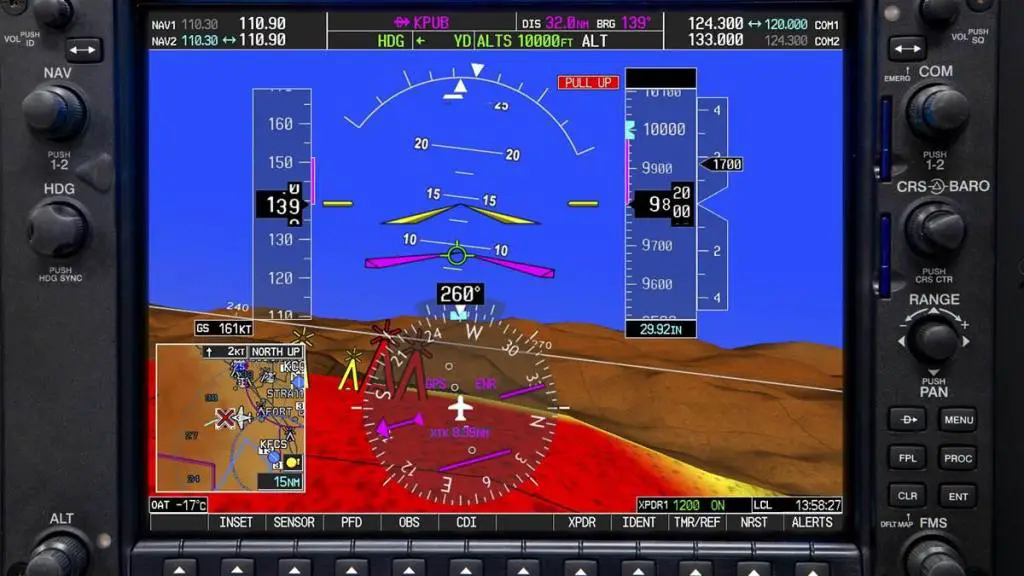
Modern M500s are equipped with the sophisticated Garmin G3000 glass cockpit, a system that matches the capability of the airframe and engine. This integrated flight deck provides:
- Large Touchscreen Displays: Centralized control of flight management, navigation, and systems.
- Synthetic Vision Technology (SVT): A 3D pathway display on the primary flight display that dramatically enhances situational awareness, especially in challenging weather or terrain.
- Advanced Autopilot & Safety Systems: Includes features like stability and protection, emergency descent mode, and precision approach capability.
- Integrated Weather & Traffic: Real-time datalink weather (NEXRAD, METARs) and traffic information (TCAS/ADS-B) are seamlessly displayed on the navigation screen.
This technology allows a single pilot to manage the aircraft’s high performance safely and efficiently, reducing workload and increasing overall safety.
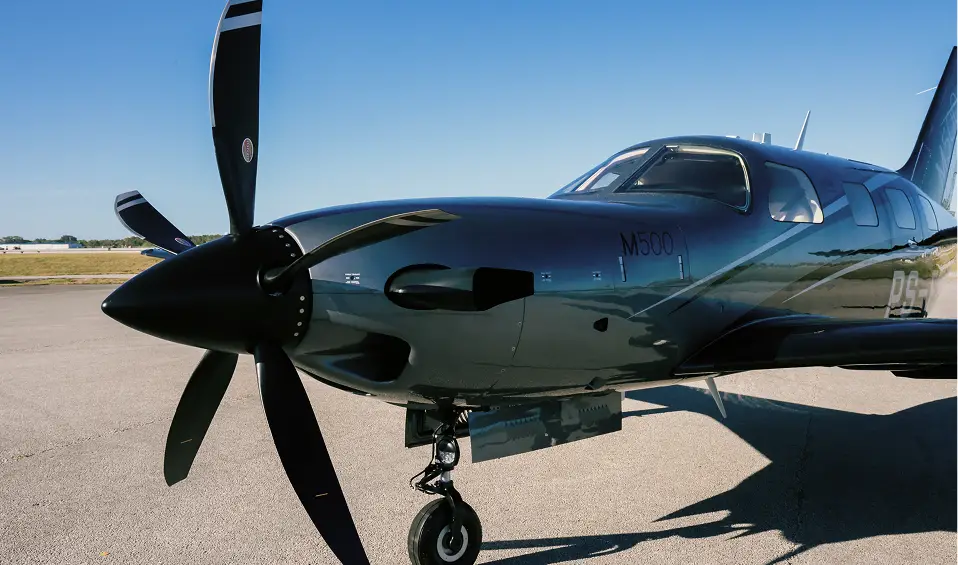
Piper M500 Price
Stepping up to an M500 represents a significant investment, but one that is carefully positioned in the market.
- Acquisition Cost: A new M500 is priced significantly higher than the piston M350, often around 50-70% more, placing it well into the multi-million-dollar range. Pre-owned Meridian and M500 models offer a more accessible entry point into the turbine category.
- Operating Costs: Fuel burn is higher than a piston, typically around 40-45 gallons per hour of Jet-A fuel. However, maintenance, while costly, follows a more predictable and structured schedule than complex piston engines. The PT6’s reputation supports strong resale value.
- Pilot Transition: Transitioning from a high-performance piston to the M500 requires specific training. Pilots need to become proficient with turbine engine management, including torque and ITT (Interstage Turbine Temperature) monitoring, propeller governing, and the unique procedures of a much more powerful aircraft.
The Competitive Landscape: M500’s Unique Niche
The M500 competes in a space with very few direct rivals.
- Vs. Piper M600: The M500’s stablemate is more powerful and has a larger cabin, but also commands a higher price. The M500 offers exceptional value for those who don’t require the M600’s maximum performance.
- Vs. Pilatus PC-12 / Daher TBM 960: These are the M500’s primary competitors. The PC-12 is larger and has a cargo door, while the TBM is faster. The M500 competes by offering a lower acquisition cost and operating expense while still delivering true turboprop performance and the comfort of a pressurized cabin.
- Vs. Cessna Caravan: While a turboprop, the Caravan is a utility-focused aircraft, not a pressurized, high-speed business travel tool. They serve vastly different missions.
Piper M500 FAQs
1. What is the single biggest advantage of the M500 over the piston M350?
The climb performance and engine reliability. The M500’s ability to climb rapidly to high altitudes on hot days and the proven durability of the PT6 engine are transformative for mission capability and dispatch reliability.
2. Is the M500 difficult to fly for a piston pilot?
It is a significant step up that requires dedicated training. The systems are more complex, the power is immense, and the speeds are higher. However, the G3000 avionics and the aircraft’s generally stable handling characteristics make the transition manageable with proper instruction.
3. Why choose a single-engine turboprop?
Modern single-engine turbines like the PT6 are incredibly reliable. The safety case is built around the engine’s reliability, the aircraft’s excellent single-engine performance (glide ratio), and the operational discipline of the pilot. The reward is turboprop performance at a fraction of the cost of a twin.
4. What is the typical mission for an M500?
It is an ideal business travel aircraft for trips of 200 to 1,000 nautical miles. It can efficiently connect city pairs that are poorly served by airlines, using smaller airports closer to final destinations.
5. How does the cabin compare to a small jet?
The M500’s cabin is narrower and has a lower ceiling than most light jets. However, it is exceptionally comfortable and quiet for a single-engine aircraft, with a club-seating arrangement that facilitates conversation and a pressurized environment that ensures passenger comfort on long flights.
6. What is the most challenging aspect of operating an M500?
Managing the operating costs. While more predictable than a complex piston, turbine maintenance is expensive. Budgeting for engine reserves, propeller overhauls, and ongoing airframe maintenance requires financial planning and discipline.
7. Is the M500 a good investment?
Piper turboprops have historically held their value very well. The PT6 engine is a global standard with a strong support network, and the PA-46 airframe is known for its longevity. As a bridge between pistons and more expensive turboprops, the M500 occupies a desirable and stable niche in the pre-owned market.

 Aviator Tells
Leave a comment