
The Piper M350 (formerly known as the Mirage M350) is a high-performance, pressurized, six-seat single-engine piston aircraft manufactured by Piper Aircraft. It is the direct descendant and evolution of the legendary Piper Malibu, an aircraft that first brought pressurization to the general aviation piston market in the 1980s.
The M350 sits at the top of Piper’s piston lineup, distinguished by its powerful turbocharged engine, a cabin that can be pressurized to maintain a comfortable cabin altitude while flying high, and a robust airframe built for reliability in the high-altitude environment. It is designed for business travelers, affluent private owners, and flight departments that require efficient, high-speed travel over long distances without stepping up to the fuel costs of a turboprop.
The Evolution from Malibu to M350
The M350’s story begins with the groundbreaking Piper PA-46 Malibu, which debuted in 1984 and revolutionized the market as the first pressurized single-engine piston aircraft. Its success proved there was a strong demand for cabin-class comfort in a piston platform. The lineage continued with the Malibu Mirage, which introduced a more powerful 350-horsepower Lycoming engine.
The M350 name itself emerged in 2015 as part of a product line rebranding, replacing the “Mirage” designation. This wasn’t just a name change; it signified a host of incremental but significant improvements. The M350 incorporated lessons learned from decades of Malibu and Mirage operation, featuring system refinements, updated avionics, and structural enhancements that solidified its reputation for robustness and safety.
It carries the torch of a design philosophy that has remained consistent for nearly 40 years: to offer a pressurized, high-altitude, high-speed travel solution in a single-engine package.
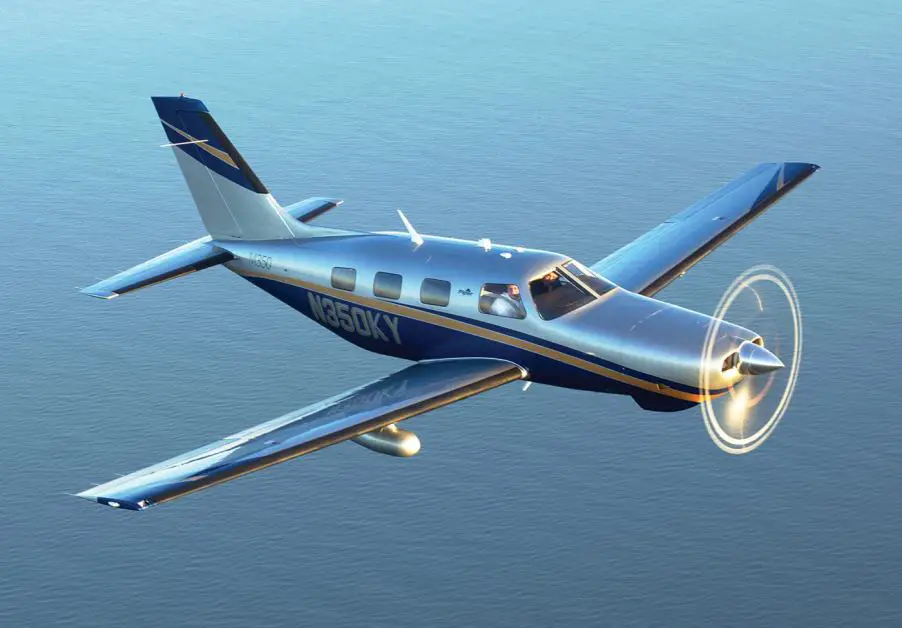
Piper M350 Specifications
The M350 is engineered from the ground up for efficient high-altitude flight.
- Airframe: All-metal, low-wing design with a roomy, cabin-class interior.
- Engine: A fuel-injected, turbocharged Lycoming TIO-540-AE2A piston engine producing 350 horsepower.
- Propeller: A three-bladed, Hartzell constant-speed propeller optimized for climb and cruise performance.
- Pressurization System: The key differentiator. The system can maintain a cabin altitude of 6,500 feet while the aircraft is flying at its maximum certified altitude of 25,000 feet.
- Landing Gear: Retractable tricycle gear, built for durability and reliability.
Performance Figures:
- Max Cruise Speed: Approximately 213 knots (245 mph) at 25,000 feet.
- Stall Speed (Flaps Down): 64 knots (74 mph).
- Rate of Climb: 1,154 feet per minute.
- Service Ceiling: 25,000 feet.
- Maximum Range: Approximately 1,300 nautical miles (with reserves).
- Useful Load: Typically around 1,400 lbs, allowing for full fuel, four occupants, and baggage.
These numbers translate to real-world utility. A typical 1,000-nautical-mile trip can be completed in about 4.5 hours, high above most weather and commercial airline traffic, in a quiet, comfortable cabin.
Piper M350 Pressurized Cabin
The pressurization system is the M350’s raison d’être. By compressing the thin outside air and pumping it into the cabin, the system allows occupants to breathe easily without oxygen masks at altitudes where the outside air is too thin to support life. The physiological and comfort benefits are profound:
- Reduced Fatigue: Passengers and pilots arrive feeling fresher, avoiding the lethargy associated with prolonged exposure to even 8,000-10,000 foot cabin altitudes in unpressurized aircraft.
- Weather Avoidance: The ability to fly at 20,000 feet or higher allows the M350 to overfly a vast majority of the turbulence and weather systems that plague lower-level flights.
- Quiet Comfort: The pressurized cabin is also exceptionally well-insulated, resulting in a quiet and serene environment conducive to work or relaxation.
The Modern Cockpit
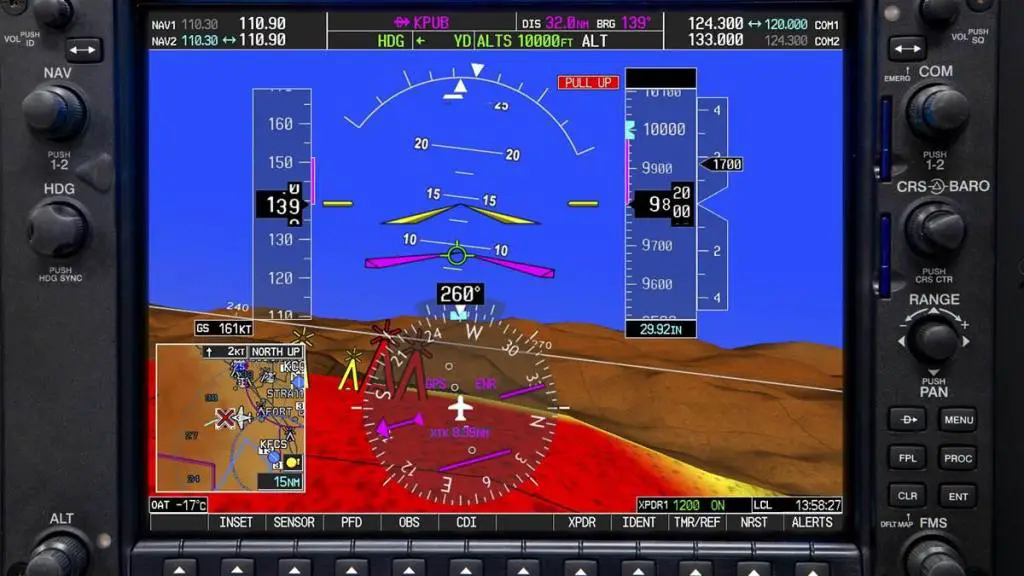
Modern M350s are equipped with the state-of-the-art Garmin G3000 integrated flight deck. This is the same level of technology found in many business jets and advanced turboprops. The system features large, high-resolution touchscreen displays that integrate:
- Flight Management: Advanced navigation, flight planning, and GPS capability.
- Situational Awareness: Synthetic Vision Technology (SVT) that displays a 3D depiction of terrain, traffic, and the runway on the Primary Flight Display.
- Systems Monitoring: Comprehensive monitoring of engine, electrical, fuel, and pressurization systems.
- Weather Data: Real-time graphical weather, NEXRAD radar, and lightning data via datalink.
- Autopilot: A fully integrated, capable autopilot for precise navigation and reduced pilot workload.
This glass cockpit transforms the M350 from a mere aircraft into a sophisticated aerial vehicle, manageable by a single pilot while providing a massive boost to situational awareness and safety.
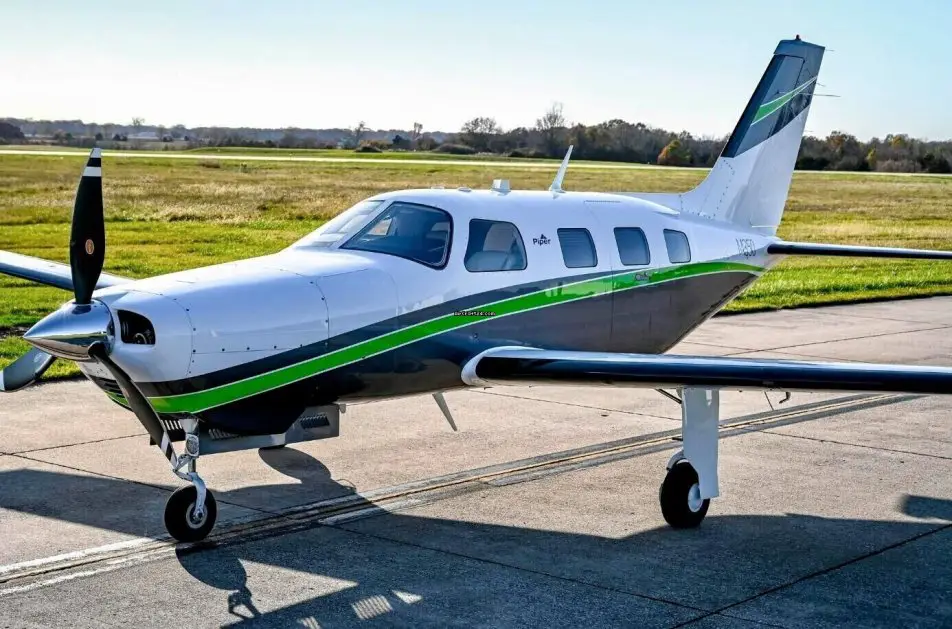
Piper M350 Ownership Cost
Owning and operating an M350 is a significant step up from a non-pressurized piston aircraft.
- Acquisition Cost: A new M350 has a base price well over $1 million USD. Pre-owned models, depending on age and equipment, can range from $500,000 to over $800,000.
- Operating Costs: Fuel burn at high-altitude cruise is typically around 22-24 gallons per hour of Jet-A. Maintenance is more complex and costly due to the pressurization system, turbocharging, and retractable gear. A well-managed annual budget for maintenance, insurance, and reserves can easily exceed $50,000-$70,000.
- Pilot Requirements: Flying the M350 safely requires a high level of proficiency. Pilots need a Complex and High-Performance endorsement, and extensive training is strongly recommended to master systems management, high-altitude aerodynamics, and emergency procedures specific to pressurization.
Piper M350 vs. The World
The M350 occupies a unique niche. Its primary competitors are not other pistons, but entry-level turboprops.
- Vs. Piper M600/SLS: The M350’s stablemate is more powerful and capable, but also significantly more expensive to purchase and operate.
- Vs. TBM 960/DA62: The Socata TBM series are true turboprops, offering superior speed and climb performance, but at a much higher acquisition and fuel cost. The M350 offers a compelling, more affordable high-altitude alternative.
- Vs. Cessna 400 Series (TTx/Corvalis): These are fast, unpressurized pistons. The M350’s pressurization gives it a decisive comfort and capability advantage for cross-country travel in any weather.
Piper M350 FAQs
1. What is the single-most important feature of the M350?
Its pressurization system. This is the feature that defines the aircraft’s mission, allowing for comfortable, efficient, and smooth travel above the weather.
2. Is it safe to fly a single-engine aircraft that high?
Modern piston engines, especially those like the M350’s Lycoming, are incredibly reliable. The M350’s high service ceiling is actually a safety feature. In the extremely rare event of an engine failure, the high altitude provides a tremendous amount of potential energy, giving the pilot a wide range of options and a long glide distance to find a suitable landing site.
3. What kind of pilot is the M350 designed for?
It is designed for the experienced, instrument-rated pilot who regularly travels long distances for business or pleasure. It is not a trainer or a casual weekend flyer’s aircraft; it is a serious travel tool.
4. How difficult is it to manage the pressurization system?
It is largely automated. The pilot sets the desired cabin altitude on a controller, and the system manages the rest. Pilot training focuses on understanding the system’s limits and handling potential failures, such as a loss of pressurization, which requires a rapid descent and the use of onboard oxygen.
 Aviator Tells
Leave a comment