
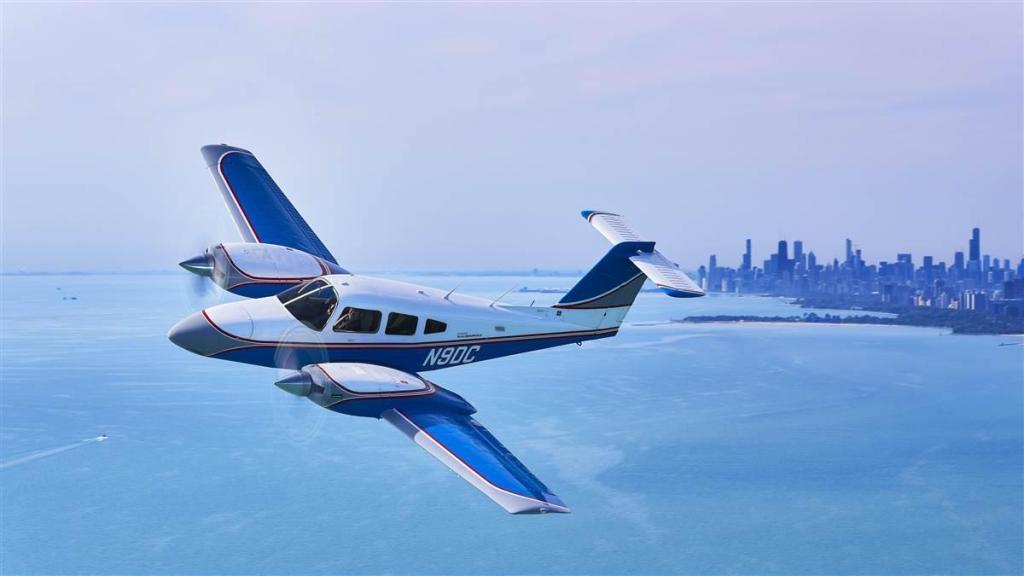
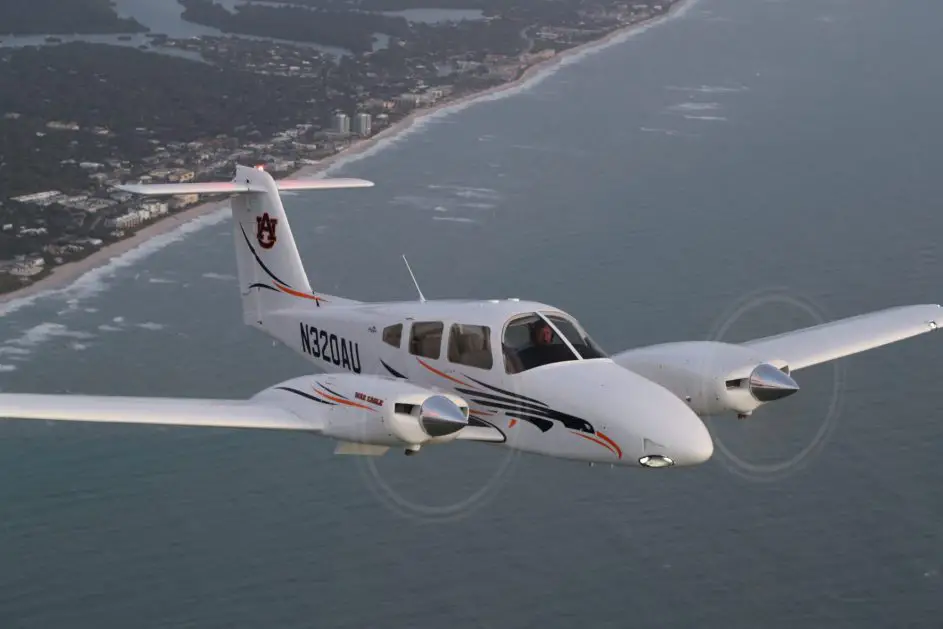
The Piper PA-44 Seminole is a light, twin-engine aircraft designed and manufactured by Piper Aircraft. Introduced in 1979, its primary mission was, and remains, multi-engine flight training. It features a conventional layout with four seats, low-mounted wings, and two piston engines mounted on the wings in a tractor configuration (pulling, rather than pushing).
It is equipped with retractable landing gear and constant-speed propellers, making it a “complex” aircraft that introduces students to the systems management required in higher-performance airplanes. Renowned for its docile handling characteristics and predictable behavior during engine failures, the Seminole has become the standard by which other multi-engine trainers are measured.
The Evolution of the Seminole
Piper Aircraft developed the PA-44 in the late 1970s to fill a crucial gap in the training market. While other light twins existed, they were often repurposed from other missions or were more expensive to operate. Piper’s goal was to create a twin from the ground up with one primary focus: training.
The Seminole was a logical evolution, sharing a strong familial resemblance with its popular single-engine sibling, the Piper PA-28 Cherokee. This was a deliberate and smart design choice. A student transitioning from a Cherokee or Warrior to a Seminole would find a familiar cockpit layout and handling feel, reducing the initial learning curve and allowing them to focus on the new complexities of a second engine.
Key models include:
- PA-44-180 Seminole: The original and most common variant, powered by two 180-horsepower Lycoming O-360 engines.
- Turbine Seminole: A brief, ambitious experiment in the early 1980s that replaced the piston engines with Pratt & Whitney PT6 turboprops. Though it never saw commercial success, it demonstrated the airframe’s robustness.
- Seminole TX/LX: Newer production models featuring modern avionics suites like the Garmin G1000 NXi, updated interiors, and other refinements that keep the platform relevant in the 21st century.
Throughout its production history, which has seen several pauses and resumptions, the Seminole’s core mission has never changed. It is the dedicated trainer for flight schools, universities, and pilot mills around the world, consistently valued for its reliability and training-centric design.
Things that will help you :
Piper PA-44 Specifications and Performance
Understanding the Seminole’s numbers is key to understanding its role.
- Engines: Two Lycoming O-360-A1H6, 180 hp each
- Propellers: Two Hartzell constant-speed, feathering propellers
- Seating: 4 (1 Pilot, 3 Passengers – though often flown with just a pilot and instructor in training)
- Max Gross Weight: 3,800 lbs
- Useful Load: Typically ~1,100 lbs
- Fuel Capacity: 108 gallons (100 usable)
Performance Figures:
- Cruise Speed: Approximately 160-175 knots (184-201 mph)
- Stall Speed (Clean): 61 knots (70 mph)
- Stall Speed (Dirty): 55 knots (63 mph)
- Rate of Climb (Both Engines): ~1,300 feet per minute
- Rate of Climb (Single Engine): ~240 feet per minute
- Service Ceiling (Both Engines): 17,100 ft
- Service Ceiling (Single Engine): 4,600 ft
- Range: Approximately 800 nautical miles
These performance numbers tell a clear story. The single-engine climb rate and service ceiling are the most critical, defining the aircraft’s capability after an engine failure and dictating safe operating procedures.
The Ultimate Test: Mastering Single-Engine Operations
The core of multi-engine training in the Seminole revolves around one crucial skill: managing an engine failure. The Seminole is designed to be a forgiving teacher for this high-stakes scenario.
The Physics of Asymmetric Thrust:
When one engine fails on a twin, the remaining engine creates a yawing motion, pulling the aircraft toward the dead engine. The pilot’s immediate and instinctive reaction—to pull back on the yoke to climb—is exactly wrong. This can lead to a loss of control. The correct procedure is encapsulated in a vital acronym: “Identify, Verify, Feather.”
- IDENTIFY: The pilot identifies the failed engine by noting the direction of yaw and confirming with the engine instruments.
- VERIFY: The pilot “verifies” by pulling the throttle on the suspected dead engine to idle. If there’s no change, it was already dead. If it was the good engine, the yaw will dramatically worsen, confirming the mistake.
- FEATHER: The pilot feathers the propeller on the dead engine. Feathering means rotating the propeller blades edge-on into the wind, which dramatically reduces drag and is the single most important action for maintaining control and performance.
The Seminole’s Vmca (Minimum Controllable Airspeed) is approximately 63 knots. This is the lowest speed at which directional control can be maintained with one engine inoperative and the other at full power. Staying above this speed is fundamental to survival.
Piper PA-44 Ownership and Operational Costs
For flight schools, the Seminole’s economics are a key part of its appeal.
- Acquisition Cost: A used 1970s or 1980s model can cost between $120,000 and $200,000. A new G1000-equipped model can exceed $750,000.
- Fuel Burn: At a typical training power setting, it burns about 18-22 gallons per hour.
- Maintenance: Maintaining two engines, two propellers, and a retractable gear system is inherently more expensive than for a single-engine aircraft. However, the Seminole is known for its mechanical simplicity and good parts availability, which helps control costs.
- Insurance: Insurance is a significant factor, especially for a trainer that often has low-time pilots at the controls.
Glass Cockpits and Advanced Avionics
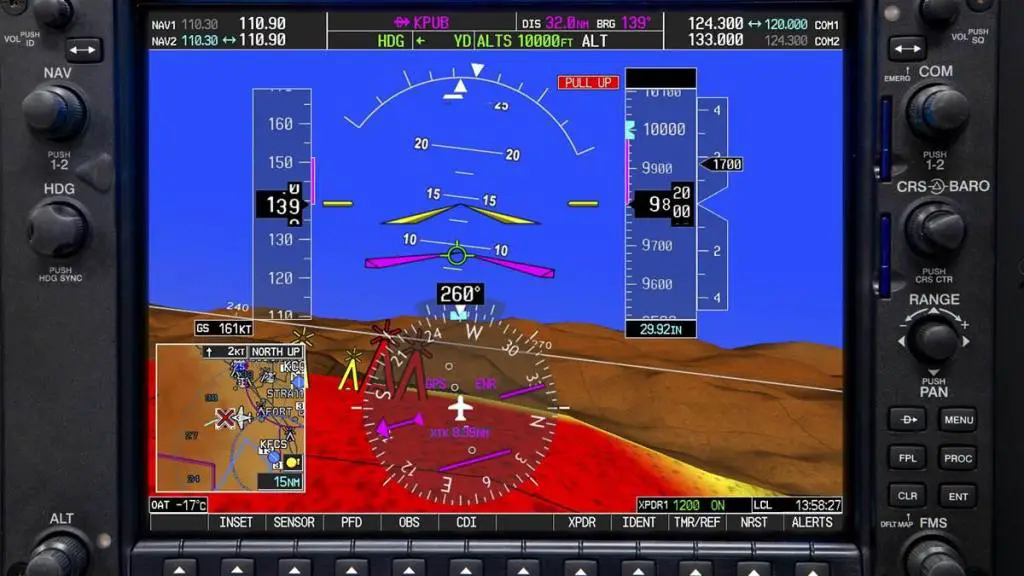
Newer Seminoles are now equipped with the Garmin G1000 NXi integrated flight deck. This glass cockpit replaces the traditional “six-pack” of analog gauges with large, high-resolution screens. For students, this is invaluable. They learn multi-engine procedures on the same type of technology they will encounter in regional airlines and corporate jets, integrating autopilot, flight management, and systems monitoring from day one.
Piper PA-44 Seminole FAQs
1. What is the most challenging part of flying a Seminole?
Without a doubt, managing an engine failure on takeoff. It requires overcoming instinct, executing the “Identify, Verify, Feather” procedure flawlessly, and maintaining control at a critical low altitude and airspeed.
2. Is the Seminole a “real” twin or just a trainer?
It is a fully capable, FAA-certified light twin. While its primary role is training, it is used for light charter, cargo, and personal transportation. Its performance, however, is modest compared to larger, more powerful twins like the Beechcraft Baron or Cessna 400-series.
3. What does “feathering” the propeller actually do?
Feathering drastically reduces the drag created by a windmilling propeller. A windmilling prop creates as much drag as a large barn door, making it nearly impossible to climb. A feathered prop creates minimal drag, which is what allows the Seminole to maintain a positive single-engine climb rate.
4. How safe is the Seminole?
The Seminole has an excellent safety record, which is a testament to its predictable handling and its role in thorough training. Like any aircraft, its safety is directly related to the pilot’s skill, proficiency, and adherence to procedures, especially regarding single-engine operations.
5. Can you actually fly on one engine?
Yes, but performance is limited. With one engine feathered at maximum gross weight, the climb rate is minimal (around 240 fpm). This highlights a critical concept in twin-engine flying: a second engine is not necessarily for going faster, but for providing a safety margin to reach an airport after a failure.
 Aviator Tells
Leave a comment