
In modern aviation one unassuming device ensures every critical message cuts through the noise: the Audio Control Panel (ACP). This often-overlooked interface serves as the acoustic nerve center of the cockpit, managing everything from air traffic control communications to intercrew conversations and emergency alerts.
When pilots navigate turbulent storms or execute precision approaches, they’re relying on the ACP to filter, prioritize, and deliver life-saving information. Far more than a simple volume knob, the ACP represents aviation’s relentless commitment to clarity in chaos, a bridge between human ears and the machine’s voice.
What is Audio Control Panel in Aviation
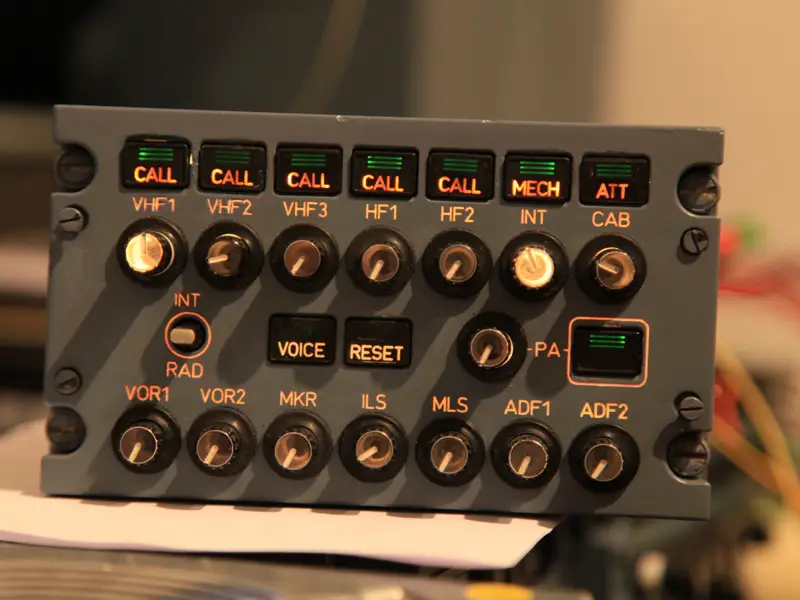
The Audio Control Panel (ACP) is a cockpit interface that allows pilots to manage audio sources, communication channels, and listening priorities. It serves as the central hub for radio communications, intercom systems, aural alerts, and passenger address systems. Typically installed on the cockpit’s overhead panel or center console, the ACP integrates with transceivers, amplifiers, and speakers to create a seamless audio environment.
you’ll need this book before you start your Airbus A320 Type Rating “click here“

Functions of Audio Control Panel
1. Transceiver Management
Modern ACPs support multiple transceivers, allowing pilots to monitor several frequencies simultaneously, prioritize incoming communications based on flight phase, and switch between VHF, HF, and satellite communication systems.
2. Audio Routing and Mixing
Advanced digital signal processing enables voice prioritization, noise cancellation, and channel mixing, combining multiple audio sources into a single headset output.
3. Control Interfaces
The ACP features rotary knobs for frequency selection and volume adjustment, push-to-talk switches for instant microphone activation, and priority buttons for marking specific channels as high-priority.
The Evolution of ACP in Aviation
1960s–1980s: Analog Systems
Early ACPs used physical switches and potentiometers. Pilots manually adjusted volumes for each channel, often while handling other flight duties.
1990s–2000s: Digital Integration
Microprocessors enabled automated volume adjustment based on noise levels, priority-based audio routing, and integration with glass cockpit systems.
2010s–Present: Networked Audio Systems
Modern systems feature software-defined interfaces, wireless connectivity, and intelligent filtering using AI-assisted noise cancellation and voice enhancement.
Table: ACP Technology Evolution
| Era | Technology | Key Features |
|---|---|---|
| 1960s-1980s | Analog Circuits | Physical knobs, basic filtering |
| 1990s-2000s | Digital Processors | Priority management, noise reduction |
| 2010s-Present | Networked Systems | Reconfigurable interfaces, AI enhancement |
Audio Control Unit & Flight Safety
1. Situational Awareness
Pilots process most information auditorily during critical phases. The ACP ensures ATC instructions are heard clearly during approach, terrain warnings override non-essential communications, and crew conversations remain uninterrupted during emergencies.
2. Workload Reduction
Automated priority management reduces the need for manual volume adjustment, filters out non-essential chatter during high-workload phases, and allows simultaneous monitoring of multiple frequencies.
3. Emergency Response
The system automatically monitors emergency frequencies, prioritizes critical alerts, and allows private cockpit conversations during abnormal situations.
The Future of ACP in Aviation
1. Artificial Intelligence Integration
Future systems will incorporate voice recognition for secure voice commands, predictive routing based on flight phase, and real-time translation capabilities.
2. Enhanced Connectivity
Developments include 5G integration for low-latency communications, satellite direct streaming, and improved cabin integration with passenger devices.
3. Cybersecurity Priorities
Advanced systems will feature encrypted audio channels, blockchain verification for communication authenticity, and hardware isolation separating critical audio functions from entertainment systems.
FAQs
How many transceivers can a modern ACP handle?
Most systems support 4-8 transceivers, with high-end business jet configurations handling up to 12. The trend is toward software-defined systems that can virtually expand channel capacity.
Why do pilots need to monitor multiple frequencies simultaneously?
During approach, pilots might need to listen to tower control for landing clearance, ground control for taxi instructions, emergency frequency for potential conflicts, and company operations for gate assignment.
Can ACPs be retrofitted to older aircraft?
Yes. Modern digital ACPs often include adapter kits for legacy aircraft. Retrofitting typically requires wiring harness modifications, antenna system upgrades, and certification paperwork.
How do ACPs handle emergency situations?
Most systems automatically monitor guard frequencies, prioritize emergency alerts over all other communications, and provide one-button isolation for crew discussions.
What happens if the ACP fails?
Aircraft typically have redundant backup panels, portable emergency transceivers, and secondary communication pathways through datalink systems.
Are there differences between commercial and military ACPs?
Military systems add secure encryption modes, resistance to electromagnetic pulses, and compatibility with tactical communication systems.
How are ACPs adapting to newer cockpit designs?
Manufacturers are incorporating touchscreen interfaces, voice command options, and smartphone-like usability patterns to accommodate younger pilots.

 Aviator Tells
Leave a comment