
the Flight Management and Guidance Computer (FMGC), the silent maestro behind Airbus’s legendary automation. From optimizing climb profiles to predicting turbulence, the FMGC doesn’t just assist pilots; it redefines their role from operators to strategic managers.
What is FMGC
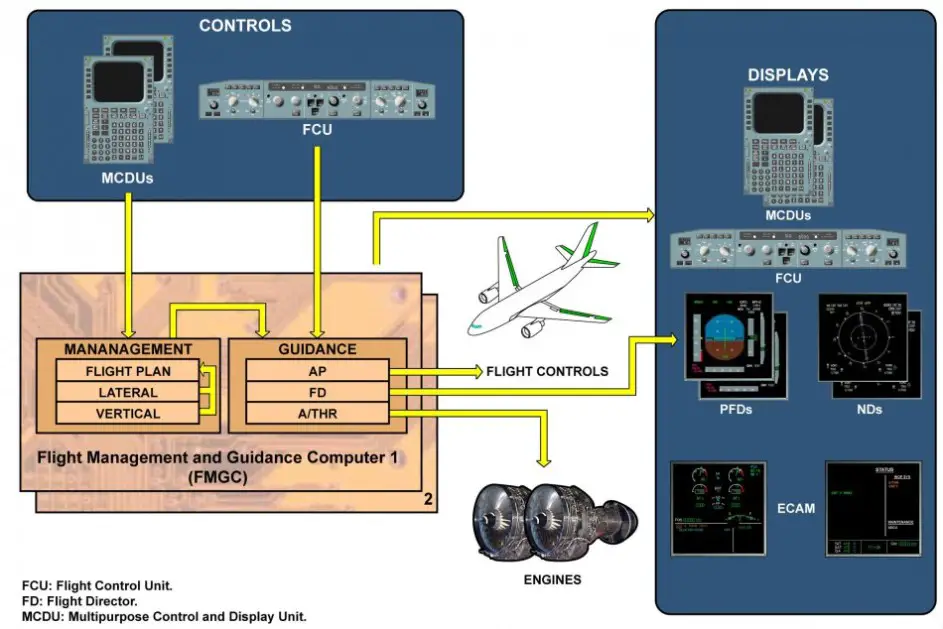
The Flight Management and Guidance Computer (FMGC) is the core processing unit of Airbus’s Flight Management System (FMS). It integrates navigation, performance calculations, and automated guidance to manage flights from takeoff to landing. Introduced on the A320 family, it now powers all modern Airbus aircraft, including the A350 and A380.
Key Components:
- Flight Management (FM) Module: Handles route planning, navigation, and performance predictions.
- Flight Guidance (FG) Module: Controls autopilot, flight director, and autothrust systems.
- Redundant Design: Dual FMGCs (Captain and First Officer) operate in sync or independently for fail-safe operation.
How FMGC Works
1. Flight Planning & Navigation
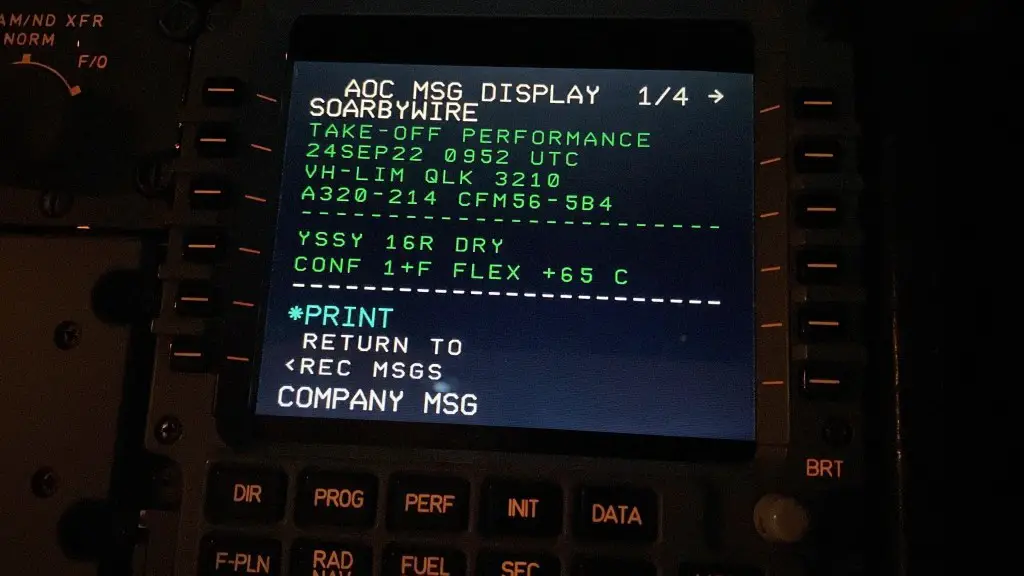
- Pilots input routes via the Multifunction Control Display Unit (MCDU), including SIDs, STARs, and waypoints.
- The FMGC cross-references GPS, IRS, and ground-based navaids to compute precise 3D trajectories.
2. Performance Optimization
- Calculates optimal speeds, fuel burns, and climb/descent profiles using real-time data (e.g., weight, temperature).
- Adjusts for variables like wind shear or turbulence, reducing fuel consumption by up to 5% per flight.
3. Guidance & Control
- Managed Mode: Fully automated navigation based on the flight plan.
- Selected Mode: Pilots override automation using the Flight Control Unit (FCU) for tactical adjustments.
4. Database Management
- Stores navigation data (updated every 28 days), airline-specific policies, and magnetic variation tables.
- Supports custom waypoints and routes for flexible operations.
5. Failure Management
- If one FMGC fails, the other assumes control. Dual failures trigger backup navigation using raw data.
you’ll need this book before you start your Airbus A320 Type Rating “click here“
Evolution of FMGC
| Era | Key Advancements |
|---|---|
| 1980s–1990s | Basic route programming and performance calculations. |
| 2000s | Integration with satellite navigation and datalink (ACARS/CPDLC). |
| 2010s–2020s | Predictive analytics for fuel optimization and turbulence avoidance. |
| Future | AI-driven flight planning and quantum-enabled navigation. |
How FMGC Enhances Safety & Efficiency
✅ Safety Innovations
- Envelope Protection: Prevents stalls, overspeed, and excessive bank angles via Normal Law controls.
- Emergency Response: Automatically generates diversion plans during engine failures or weather crises.
✅ Operational Efficiency
- Reduces pilot workload by 40% through automated checklists and system monitoring.
- Cuts carbon emissions via optimized vertical profiles and continuous descent approaches.
✅ Economic Benefits
- Saves airlines $150,000 annually per aircraft through fuel efficiency and maintenance forecasting.
FMGC in Action
Scenario: Engine failure mid-Atlantic.
- FMGC Response:
- Recalculates drift-down altitude.
- Identifies nearest diversion airports.
- Adjusts autothrust for single-engine operation.
- Communicates with ATC via datalink.
- Outcome: Safe landing with minimal passenger disruption.
The Future of FMGC
- Predictive Maintenance: AI algorithms forecast system failures before they occur.
- Space-Based Navigation: Integration with Starlink for global, real-time data exchange.
- Cybersecurity Enhancements: Blockchain-protected databases to prevent spoofing.
FMGC FAQs
Q1: Can FMGC land the aircraft?
A: While it guides autopilot to 50 feet above the runway, pilots handle the final touchdown and rollout.
Q2: What happens if both FMGCs fail?
A: Pilots revert to raw data navigation using backup instruments and ATC guidance.
Q3: How often is FMGC data updated?
A: Navigation databases refresh every 28 days; performance data updates in real-time.
Q4: Does FMGC work in military aircraft?
A: Yes, modified versions support encrypted communications and terrain masking.
Q5: Can FMGC reduce turbulence impacts?
A: Yes, it predicts turbulence zones and adjusts altitude or route proactively

 Aviator Tells
Leave a comment