
Imagine 50,000 aircraft slicing through global airspace simultaneously a ballet with no choreographer, where a single misstep means catastrophe. This was aviation’s reality before ADS-B, a technology that transformed disconnected metal tubes into a synchronized ecosystem where every plane sees and is seen.
When a drone swarm threatened Phoenix airspace, when a medevac helicopter pierced thick fog, when lost aircraft vanished over oceans ADS-B became the silent conductor orchestrating safety from cockpit to control tower.
What is ADS-B
Automatic Dependent Surveillance–Broadcast (ADS-B) is the digital nervous system connecting all aircraft. Unlike radar that pings targets, ADS-B enables planes to self-broadcast their:
- Precise GPS position (accurate to 3 meters)
- Altitude and velocity vector
- Unique identity and flight path
- Emergency status (e.g., hijacking, engine failure)
This real-time data flows continuously to:
✅ Other aircraft
✅ Air traffic control
✅ Ground stations
✅ Satellites
Creating a living map of the skies updated 10x faster than legacy radar.
you’ll need this book before you start your Airbus A320 Type Rating “click here“
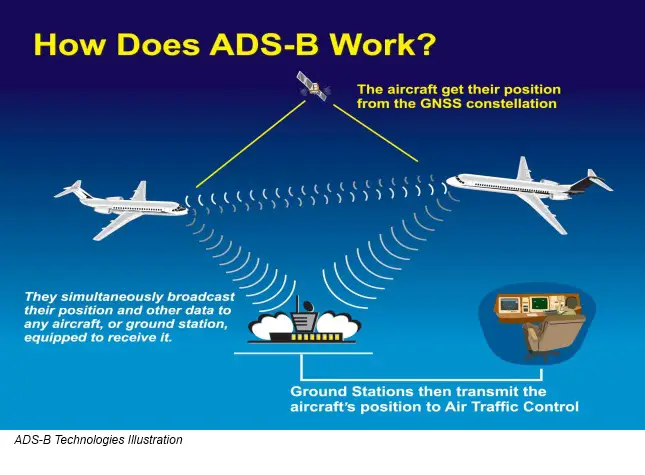
How ADS-B Works
Two-Way Data Streams
- ADS-B Out: Broadcasts aircraft position (mandated in most airspace)
- ADS-B In: Receives traffic/weather data (voluntary but game-changing)
Three-Part Ecosystem
| Component | Function | Revolutionary Impact |
|---|---|---|
| Aircraft Transponder | Broadcasts GPS position + flight data | Replaces radar “sweeps” with constant updates |
| Ground Stations | Relays signals to ATC networks | Covers canyons/oceans where radar fails |
| Satellites | Global surveillance (e.g., Aireon network) | Tracks oceanic flights in real-time |
How ADS-B Changed Everything
- Mountain & Canyon Safety
- Allows visual separation in terrain where radar fails (Alaskan range, Rockies)
- Reduced GA midairs by 62% in high-risk corridors
- Oceanic Tracking Revolution
- Ended 4-hour radar gaps over oceans
- Enabled 30-mile separation (vs. 100 miles pre-ADS-B)
- Drone Integration
- ADS-B Out now required for commercial drones
- Prevents UAVs from blundering into airliners
- Emergency Response
- Broadcasts distress codes instantly to all nearby aircraft
- Guided 2023 Alaska bush rescue through whiteout conditions
- Precision Landing
- Enables Approaches in radar-blind zones
- Cut missed approaches at mountain airports by 81%
ADS-B vs. Radar
| Capability | Traditional Radar | ADS-B |
|---|---|---|
| Update Speed | 5-12 seconds | < 1 second |
| Coverage | Line-of-sight only | Global via satellites |
| Accuracy | 100-500 meters | 3-5 meters |
| Aircraft Info | Position only | ID, Speed, Heading, Intent |
| Cost Efficiency | $10M per station | $100k per station |
Radar remains as backup but ADS-B is now aviation’s primary surveillance system.
The Mandate That Changed Skies: FAA’s 2020 Rule
Since January 1, 2020, ADS-B Out is required in:
- Class A/B/C airspace (above 18,000 ft and near major airports)
- Class E airspace (10,000 ft+ over CONUS)
Exceptions: Vintage aircraft without electrical systems
Non-compliance risks:
- $15,000+ fines
- ATC denial of entry
- Loss of instrument flight privileges
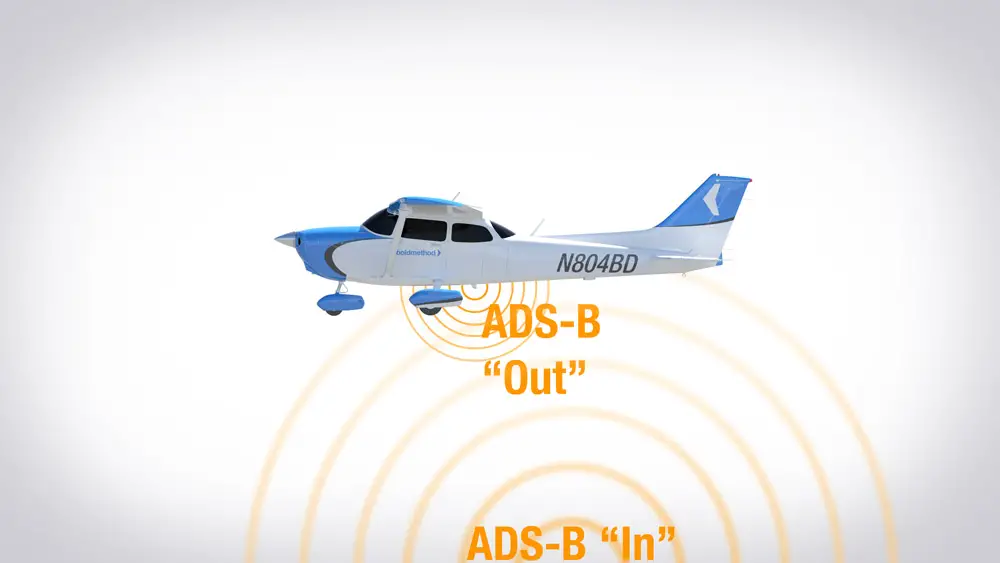
ADS-B In
While Out is mandatory, In delivers cockpit benefits:
- Free Weather: FIS-B service streams NEXRAD radar, METARs, TAFs
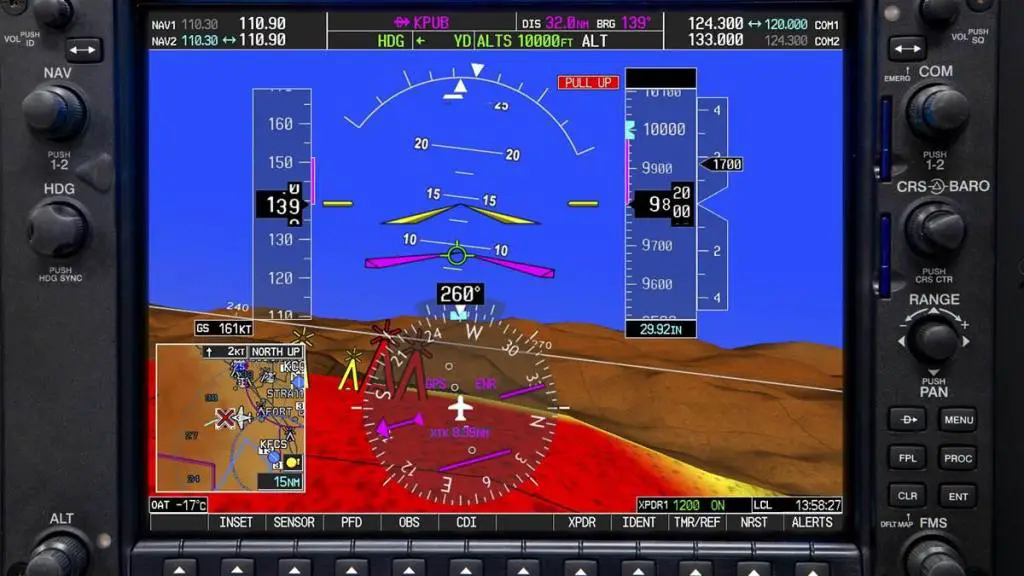
- Traffic Alerts: Shows nearby aircraft (even non-ADS-B targets via TIS-B)
- Surface Maps: Airport vehicle tracking during taxi
Equipment cost: $2,000–$8,000 for GA aircraft (e.g., Garmin GDL 82)
ADS-B transformed aviation from a collection of isolated flights into a single living organism. Each broadcast is a neuron firing; each ground station a synapse relaying danger; each satellite an overseeing cortex. When you fly today, you’re not just navigating, you’re participating in a digital hive mind that sees storms forming over oceans, drones rising near cities, and emergencies unfolding in real-time.
This is the paradox of modern flight: The emptier the skies appear from your window, the more crowded they become in the realm of data. ADS-B is the thread weaving this invisible safety net, one that caught 217 potential midair collisions in 2023 alone. For pilots, it’s the ultimate copilot. For controllers, an unblinking eye. For passengers? The silent reason you’ll likely never know how close disaster came.
ADS-B FAQs: What Pilots Actually Ask
Q: Can ADS-B track me if my transponder fails?
A: No, it requires a functioning transponder. Always carry backup comms.
Q: Why does my ADS-B show “anonymous” aircraft?
A: Privacy-enabled modes mask tail numbers (used by law enforcement/military).
Q: How accurate is the altitude data?
A: Within 25 feet superior to radar’s 250-foot margin.
Q: Can drones really use ADS-B?
A: Yes, new 1090 MHz “mini-transponders” weigh under 200g (e.g., uAvionix ping2000).
Q: Does ADS-B work in war zones?
A: Military aircraft use encrypted modes (e.g., Mode 5) to avoid detection.
Q: What’s the #1 installation mistake?
A: Poor antenna placement causing “ghosting” errors. Always hire certified avionics techs.
Q: Why do gliders appear on ADS-B?
A: Many use FLARM (collision tech) that broadcasts via ADS-B ground stations.

 Aviator Tells
Leave a comment