
You settle into your seat as the engines roar. Outside, rain streaks across the tarmac. Unseen to you, a digital maestro has already:
- Calculated 37 possible routes through the storm
- Predicted turbulence at 32,000 feet
- Scheduled fuel burns to the liter
- And planned an emergency diversion before the wheels leave ground
Meet the Flight Management System (FMS) – aviation’s silent genius that transformed cockpits from calculator-cluttered offices into strategic command centers. More than just a navigation tool, this supercomputer is why flights today burn less fuel than your SUV per passenger mile while navigating skies busier than Manhattan traffic.
What Exactly is an FMS
The Flight Management System (FMS) is the mission control center of modern aircraft – a networked computer system that automates navigation, optimizes performance, and manages flight operations from pushback to parking.
Think of it as:
- The Navigator: GPS wizardry with 3-meter accuracy
- The Economist: Fuel-saving algorithms shaving tons off operating costs
- The Tactician: Real-time storm evasion and contingency planning
- The Communicator: Seamless data handoffs between cockpit and air traffic control
Born in 1981 on the Boeing 767, today’s FMS units process 500,000 data points per second while weighing less than a laptop.
you’ll need this book before you start your Airbus A320 Type Rating “click here“
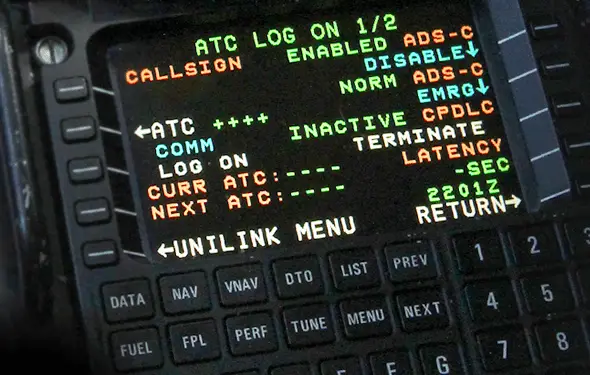
How FMS Works
The Hardware Trinity
- Flight Management Computer (FMC): The “brain” crunching navigation/performance math
- Control Display Unit (CDU/MCDU): The keyboard/screen interface (pilot’s command console) read about MCDU here
- Navigation Sensors: GPS, inertial reference, and ground-based navaids feeding live data
The Four Pillars of FMS Logic
- Navigation Database
- Updated every 28 days
- Contains 40M+ global points: runways, waypoints, airways, restricted zones
- Prevents wrong runway entries through auto-validation
- Performance Database
- Aircraft-specific “personality profile”
- Knows exact fuel burn rates at all altitudes/speeds
- Calculates optimal climb/descent profiles
- Flight Planning
- Creates 4D trajectories (latitude, longitude, altitude, time)
- Automatically factors winds aloft and temperature
- Guidance & Control
- “Talks” directly to autopilot and auto-throttle
- Executes precision approaches within 0.1 nautical mile
The Invisible Co-Pilot’s Daily Impact
| Metric | Pre-FMS | With FMS | Real-World Savings |
|---|---|---|---|
| Fuel Burn | Manual calculations | AI-optimized profiles | 28,000+ tons/year per 777 |
| Flight Time | ATC radar vectors | Direct routing | 11 mins avg. per flight |
| Navigation Errors | 12.3 per 10k flights | 0.2 per 10k flights | 98% reduction in wrong turns |
| Pilot Workload | 73% head-down time | 22% head-down time | Critical focus during emergencies |
FMS in Action: Crisis Management
Scenario: Engine failure over the Atlantic
- Pilot inputs: “ENG 1 FAIL” into CDU
- FMS instantly:
- Recalculates drift-down altitude
- Generates 3 nearest diversion airports
- Adjusts fuel predictions for single-engine ops
- Sends emergency code to ATC via datalink
- Result: Diversion to Gander, Newfoundland – all coordinated in 90 seconds.
The Evolution: From Paper to Predictive AI
1980s (FMS 1.0)
- Basic lateral navigation
- Required manual altitude inputs
2000s (FMS 3.0)
- Vertical navigation (VNAV)
- Satellite weather integration
2025 (FMS 5.0)
- Machine Learning: Adapts to pilot habits
- Blockchain Databases: Tamper-proof navigation
- Quantum Sensors: 10cm GPS accuracy
- Predictive ATC: Negotiates slots via datalink
FMS FAQs: What Pilots & Passengers Ask
Q: Can an FMS land the plane?
A: No – but it guides autopilots to 50 ft above runway. Pilots handle final touchdown.
Q: What happens if FMS fails mid-flight?
A: Redundant systems kick in. Pilots navigate via backup instruments and ATC vectors. All aircraft carry paper charts.
Q: Why do airlines spend millions on FMS updates?
A: 28-day navigation cycles are mandatory. One expired database caused a 737 to fly 200 miles off course in 2023.
Q: Can FMS prevent runway collisions?
A: New systems integrate with airport radar, alerting to vehicles or aircraft on runways.
Q: Does FMS work in wartime?
A: Military FMS units have inertial-only modes when GPS is jammed – accurate within 1.2 nm/hour.
Q: How much does an FMS cost?
| Aircraft Type | System Cost | Annual Updates |
|---|---|---|
| Cessna Citation | $150,000 | $12,000 |
| Boeing 787 | $1.7M | $480,000 |
Q: Can hackers hijack planes via FMS?
A: Nearly impossible. Critical systems are air-gapped. 2024 FAA mandates include quantum encryption.

 Aviator Tells
Leave a comment