
For decades, the classic “six-pack” of analog dials and gyroscopic instruments – the airspeed indicator, altimeter, attitude indicator, heading indicator, vertical speed indicator, and turn coordinator – was the undisputed heart of every aircraft cockpit. Pilots mastered the intricate dance of scanning these separate instruments, mentally piecing together the aircraft’s state. While reliable, this system demanded intense focus and left little room for error interpretation. Then came a transformation so profound it earned a new name: the “glass cockpit.” At the core of this revolution lies the Electronic Flight Instrument System (EFIS).
EFIS Defined: An Electronic Flight Instrument System (EFIS) is a digital flight deck display system that replaces traditional electromechanical flight instruments with integrated electronic screens. It presents critical flight data – including attitude, altitude, airspeed, heading, navigation, and systems information – in a consolidated, easily interpretable format, significantly enhancing pilot situational awareness and safety.
The Evolution of Cockpit Displays
The transition wasn’t overnight. Early “steam gauge” cockpits relied on intricate mechanical linkages, vacuum-driven gyroscopes, and magnetic sensors. While ingenious, these systems had limitations:
- High Workload: Pilots constantly scanned multiple, often spatially separated, instruments.
- Limited Integration: Correlating data from different instruments (e.g., heading vs. navigation) required mental calculation.
- Clutter & Space: Numerous individual instruments crowded the panel.
- Mechanical Failures: Gyroscopes could tumble, vacuum systems could fail, and linkages could wear.
The seeds of EFIS were planted in the 1970s, with cathode ray tube (CRT) technology making the first electronic displays feasible. Airlines like Boeing and Airbus pioneered these systems in the 1980s (e.g., Boeing 767). While revolutionary, early CRT systems were bulky, heavy, power-hungry, and generated significant heat.
The true explosion of EFIS into wider aviation came with the advent of Liquid Crystal Displays (LCDs) and later, LED and OLED technologies in the 1990s and 2000s. These displays were lighter, thinner, more reliable, energy-efficient, and brighter, making EFIS practical and cost-effective for business aviation and eventually general aviation aircraft. Systems like the Garmin G1000 brought sophisticated glass cockpits to a much broader pilot community.
If you are willing to start you airline training on Airbus A320 this book will help you. “click here“

Table: Evolution of Cockpit Display Technology
| Era | Technology | Primary Display Type |
|---|---|---|
| Pre-1980s | Electromechanical | Analog “Steam Gauges” |
| 1980s-1990s | Early Digital (EFIS) | Cathode Ray Tubes (CRTs) |
| 1990s-2000s | Mature EFIS / Glass | Liquid Crystal Displays (LCD) |
| 2000s-Present | Advanced Glass Cockpits | Active Matrix LCD / LED / OLED |
Components of an EFIS
A modern EFIS isn’t just a single screen; it’s an integrated system with specialized components working together:
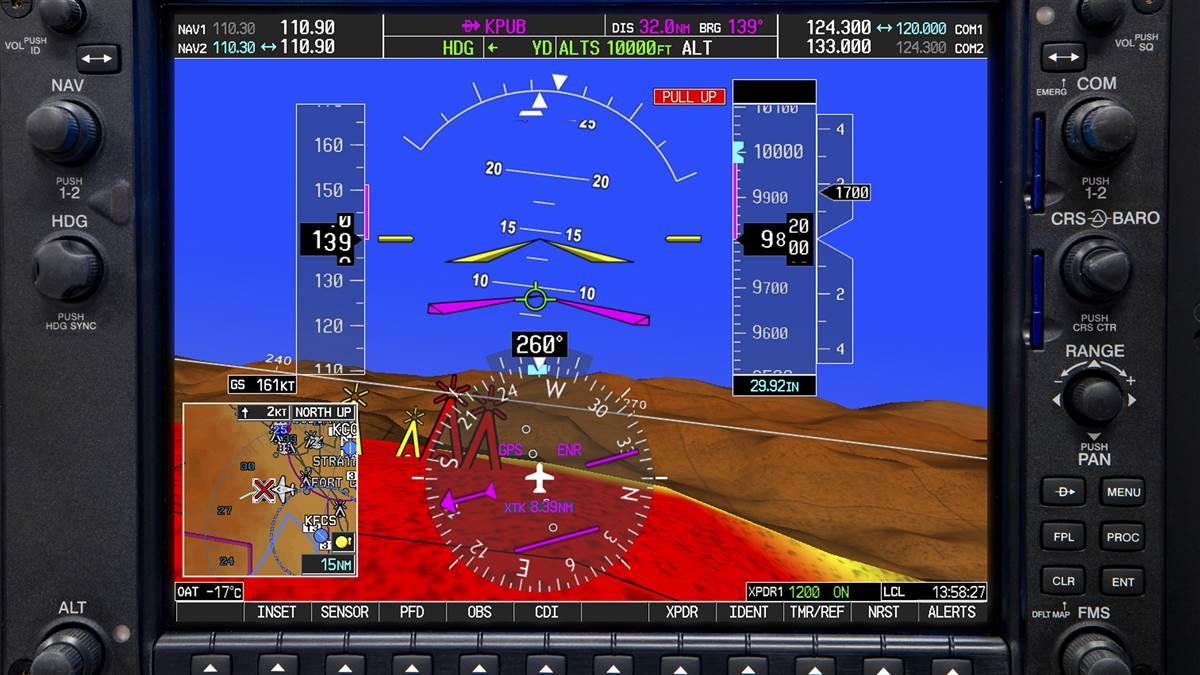
- Primary Flight Display (PFD): This is the pilot’s primary situational awareness tool, replacing the traditional Attitude Indicator and integrating many more functions. The PFD centrally features the Electronic Attitude Director Indicator (EADI), showing aircraft pitch and roll against an artificial horizon. Surrounding this are integrated digital presentations of:
- Airspeed (Tape)
- Altitude (Tape)
- Heading (Compass Rose)
- Vertical Speed Indicator (VSI)
- Flight Director Cues
- Autopilot/Auto-throttle Status
- Navigation Course Deviation (e.g., ILS localizer/glideslope)
- Radio Altimeter Height (Critical for approach)
- Critical Annunciations and Alerts.
- Multi-Function Display (MFD) / Navigation Display (ND): Often referred to as the Electronic Horizontal Situation Indicator (EHSI), this screen provides spatial awareness. It typically shows:
- Moving Map (showing aircraft position, route, waypoints, airports, airspace)
- Navigation data (VOR radials, GPS tracks, bearing/distance)
- Weather Radar Overlays (precipitation, storms)
- Traffic Information (TCAS/ADS-B)
- Terrain Awareness (TAWS/TAWS)
- System Pages (optional, often shared with EICAS)
- Checklists (optional).
- Engine Indicating and Crew Alerting System (EICAS) / Electronic Centralized Aircraft Monitoring (ECAM): While sometimes considered a separate system, it’s integral to the modern EFIS glass cockpit. EICAS (Boeing term) or ECAM (Airbus term) displays:
- Engine Parameters (RPM, EGT, Fuel Flow, Oil Pressure/Temp)
- Aircraft System Statuses (Electrical, Hydraulic, Fuel, Environmental)
- Centralized Alerting: Provides visual and aural warnings and cautions, along with checklists for resolving system malfunctions.
- Supporting Infrastructure:
- Symbol Generators / Display Processors: Powerful computers that collect data from aircraft sensors (Air Data Computers, Inertial Reference Systems, GPS, Radios, etc.), validate it, and generate the complex graphics for the PFD and MFD. Redundancy is key, with multiple generators typically feeding each display.
- Control Panels: Allow pilots to select display modes (e.g., map view, approach view), ranges (zoom level), and enter data. These often integrate with the Flight Management System (FMS).
- Data Buses: High-speed digital networks (like ARINC 429/629) that shuttle vast amounts of information between sensors, computers, and displays.

Why Glass? The Compelling Advantages of EFIS
The shift from analog to EFIS wasn’t just about modernity; it delivered tangible, significant benefits:
- Dramatically Enhanced Situational Awareness: This is the paramount advantage. EFIS integrates all critical flight information onto one or two intuitive screens. Pilots see the big picture instantly – how attitude relates to heading, where the aircraft is relative to terrain and weather on the map, and the status of key systems. Features like Synthetic Vision Technology (SVT) provide a 3D, computer-generated view of terrain, runways, and obstacles, invaluable in poor visibility.
- Reduced Pilot Workload: Integrating information reduces the need for constant, wide scanning and mental cross-checking. Flight director cues, navigation overlays, and automated alerts allow pilots to focus more on decision-making and less on data gathering and basic interpretation.
- Improved Safety: Enhanced awareness and reduced workload inherently contribute to safety. EFIS systems provide predictive capabilities (like terrain awareness warnings) and clear, prioritized alerts for system malfunctions or hazardous flight conditions (e.g., low airspeed, high descent rate) often using color changes or audio warnings. Studies, including those by the FAA, have linked EFIS adoption to reductions in accidents caused by pilot error.
- Decluttering and Flexibility: EFIS eliminates panel clutter. More importantly, displays are highly configurable. Pilots can choose what information is most relevant for the flight phase (e.g., full map in cruise, expanded approach guidance on final). Data can be layered (e.g., weather overlaid on the navigation map).
- Increased Reliability & Reduced Maintenance: While not immune to failure, EFIS systems have fewer moving parts than complex electromechanical instruments like HSIs or electromechanical ADIs. This generally translates to higher reliability and lower long-term maintenance requirements.
- Advanced Features & Integration: EFIS enables capabilities impossible with analog gauges: moving maps with real-time weather and traffic, detailed vertical situation displays, graphical flight planning, and seamless integration with autopilots and Flight Management Systems (FMS). This integration paves the way for more efficient navigation and fuel management.
- Redundancy: Modern EFIS designs incorporate multiple symbol generators and cross-side data feeding. If one PFD fails, critical flight information can often be transferred to the MFD or the other pilot’s displays.
Table: EFIS Advantages vs. Traditional Analog Instruments
| Feature | Traditional Analog Instruments | EFIS (Glass Cockpit) |
|---|---|---|
| Information Integration | Fragmented across 6+ instruments | Consolidated on PFD/MFD/EICAS |
| Situational Awareness | Limited, requires mental synthesis | High, with integrated map, terrain, traffic, weather |
| Workload | Higher, constant scan & cross-check | Reduced, intuitive displays, automation cues |
| Alerts & Warnings | Basic visual flags, limited aural | Advanced visual (color/shape changes) & prioritized aural |
| Display Flexibility | Fixed format per instrument | Configurable, declutter modes, selectable layers |
| Advanced Features | None (basic data only) | Moving Maps, SVS, TAWS, FMS Integration, etc. |
| Maintenance | Higher, moving parts, frequent calibration | Lower (solid-state), though complex repairs costly |
| Redundancy | Limited, often individual instruments | High, system-level redundancy, data sharing |
Human Factors and the Pilot-EFIS Interface
Designing effective EFIS isn’t just about technology; it’s deeply rooted in human factors engineering:
- Intuitive Design: Information is presented graphically using standardized symbols and color coding (e.g., green for safe, red for warnings, magenta for GPS-guided flight paths). This allows for rapid recognition.
- Decluttering: EFIS software automatically removes non-essential information based on the flight phase (e.g., removes glide slope indicator when not on an ILS approach) or can be manually decluttered to reduce visual noise during high-workload phases.
- Prioritization & Alerting: Critical warnings demand immediate attention and are designed to capture the pilot’s focus through distinct colors, shapes, and sounds. Less critical cautions and advisories are presented less intrusively.
- Ergonomics: Display brightness automatically adjusts via ambient light sensors, and controls are positioned for ease of access.

The Future of EFIS in Aviation
EFIS technology continues to evolve rapidly:
- Larger, Higher-Resolution Displays: Touchscreens are becoming standard, allowing more intuitive interaction and flexible display partitioning (e.g., splitting an MFD into two functional areas).
- Enhanced Vision Systems (EVS) & Synthetic Vision Systems (SVS): Combining real-time infrared camera imagery (EVS) with advanced 3D databases (SVS) provides unparalleled situational awareness in all weather conditions, effectively “seeing through” fog, rain, and darkness.
- Augmented Reality (AR) & Head-Up Displays (HUDs): Projecting critical flight information (speed, altitude, attitude, guidance) directly onto the windshield allows pilots to keep their eyes “out of the cockpit” during critical phases like takeoff and landing, further enhancing safety. Conformal symbology (aligned with the real world) is key here.
- Integration of Artificial Intelligence (AI): AI has potential for analyzing vast amounts of sensor data to predict system failures before they happen, optimize flight paths in real-time for weather and turbulence avoidance, and provide intelligent decision support to pilots.
- Networked Information & Connectivity: Real-time sharing of aircraft data (position, intent, health) with ground operations, air traffic control, and other aircraft promises to enhance traffic flow management, maintenance planning, and overall operational efficiency.
Frequently Asked Questions (FAQ) About EFIS
- Is EFIS more reliable than traditional instruments? Generally, yes. With far fewer moving parts, EFIS components are less prone to wear-and-tear failures common in electromechanical gyros and linkages. However, they are complex electronic systems, and failures can occur. This is why redundancy (multiple displays, symbol generators, data sources) is a critical design principle in certified EFIS installations.
- What happens if an EFIS screen fails? Redundancy is key. If one PFD fails, critical flight information is typically automatically transferred to the remaining MFD or the other pilot’s PFD. Pilots are trained to manage failures using backup displays and procedures. Aircraft also retain basic backup analog instruments (e.g., standby attitude, airspeed, altimeter) as a last resort.
- Is EFIS only for large airliners? Absolutely not! While pioneered in airliners, EFIS technology has dramatically decreased in cost and size. Sophisticated systems like the Garmin G3X Touch or Dynon SkyView HDX are now common in new light general aviation aircraft and are very popular retrofit options, replacing aging “steam gauge” panels.
- Is training required to fly with EFIS? Yes! Transitioning from a traditional six-pack to a glass cockpit requires specific training. While EFIS reduces workload once proficient, the initial learning curve involves understanding the system architecture, display interpretations, menu structures, and failure modes. Proper training is crucial for safety.
- What does “declutter” mean on an EFIS? Declutter refers to the system’s ability (either automatic or pilot-selected) to remove non-essential information from the screen during high-workload phases (like approach) or when the display becomes too busy. This reduces visual distraction and allows the pilot to focus on the most critical parameters.
- Is it worth retrofitting my older aircraft with EFIS? This depends on your budget, mission, and the condition of your existing instruments. While offering significant advantages in safety and capability, EFIS retrofits are a major investment ($15,000 – $50,000+). If facing costly repairs to old gyros or an HSI, upgrading to EFIS often becomes financially justifiable in the long run while adding substantial capability. If you primarily fly VFR in good weather with well-maintained instruments, the urgency is less.
- What’s the difference between PFD and MFD?
- PFD (Primary Flight Display): Your primary instrument for aircraft control. Shows Attitude, Airspeed, Altitude, Heading, Vertical Speed, Navigation Deviation, and critical alerts. Essential for flying the aircraft.
- MFD (Multi-Function Display): Your primary navigational and systems awareness tool. Shows Moving Map, Weather Radar, Traffic, Engine/Systems Information (often via EICAS pages), Checklists, and more. Essential for knowing where you are, what’s around you, and the aircraft’s status.


Leave a Reply