
Among the most critical acronyms pilots live by is VMC – Visual Meteorological Conditions. This isn’t just jargon; it’s the fundamental weather environment that makes visual flight possible and safe. When VMC exists, pilots can navigate, avoid hazards, and maintain control primarily by looking out the window. When it doesn’t, the rules of the game change dramatically. Let’s demystify VMC and understand why it’s the cornerstone of visual flight.
What Exactly Are Visual Meteorological Conditions (VMC)?
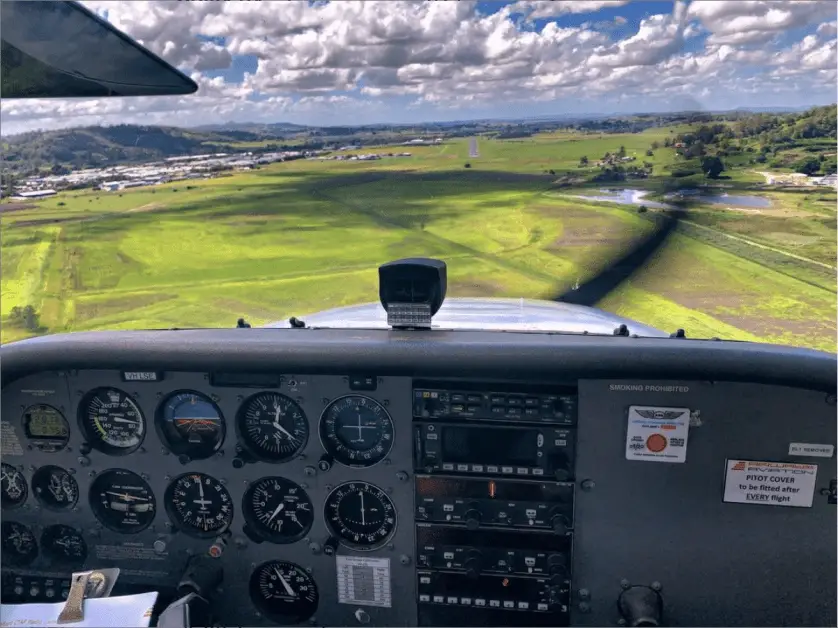
Imagine flying solely by looking out the window, trusting your eyes to see the horizon, spot other aircraft, identify landmarks, and avoid terrain. That’s the essence of flying under Visual Meteorological Conditions (VMC). It defines the specific weather “envelope” where visibility and cloud clearance are sufficient for pilots to safely operate an aircraft by visual reference to the earth’s surface and the natural horizon.
Crucially, VMC isn’t subjective or a vague “nice day.” It’s strictly defined by aviation regulations (like FAR 91.155 in the United States, or similar rules globally under ICAO frameworks). These regulations set minimum thresholds for:
- Flight Visibility: The distance forward (in statute miles – SM) a pilot can see and identify prominent unlighted objects by day, or lighted objects by night. This is measured in actual flight conditions, not necessarily ground reports.
- Distance from Clouds: Pilots must maintain specific minimum distances horizontally and vertically from any cloud. This buffer zone is vital for the “see-and-avoid” principle.

VMC Requirements
The specific numbers for visibility and cloud clearance aren’t one-size-fits-all. They vary depending primarily on:
- Airspace Class: Rules are strictest in busy, controlled airspace near airports (like Class B, C, D, and E surface areas) and become less stringent in uncontrolled airspace (Class G and some Class E).
- Altitude: Different rules apply below and above key altitudes, typically 10,000 feet Mean Sea Level (MSL) or 1,200 feet Above Ground Level (AGL).
- Time of Day: Night flying often has slightly different (usually more conservative) visibility requirements due to reduced visual cues.
Here’s a simplified look at common VMC requirements (Always consult specific regulations for exact figures!):
- Controlled Airspace (e.g., near airports – Class B, C, D, E surface):
- Flight Visibility: At least 3 statute miles.
- Cloud Clearance: “500 feet below, 1,000 feet above, 2,000 feet horizontal” (Often abbreviated as “Clear of clouds by 500-1000-2000”). This means you must be able to fly maintaining at least 500 feet vertically below any cloud layer, 1000 feet vertically above any cloud layer, and 2000 feet horizontally from any cloud.
- Uncontrolled Airspace (Class G) Below 10,000 ft MSL:
- Day: 1 SM visibility, “Clear of Clouds” (you must remain completely outside of any cloud).
- Night: 3 SM visibility, “500 feet below, 1,000 feet above, 2,000 feet horizontal” from clouds.
- Higher Altitudes (Above 10,000 ft MSL):
- Generally requires 5 SM visibility and “1,000 feet below, 1,000 feet above, 1 statute mile horizontal” from clouds.
Why VMC Matters Profoundly
VMC isn’t just a regulatory checkbox; it’s the bedrock of safety for a vast portion of aviation, particularly Visual Flight Rules (VFR) operations. Here’s why it’s non-negotiable:
- The See-and-Avoid Principle: This is the absolute cornerstone of collision avoidance in VMC. Good visibility allows pilots to visually spot and steer clear of other aircraft (the biggest threat), terrain, obstacles (towers, buildings), birds, and even weather phenomena. Radars and traffic alerts help, but nothing replaces the pilot’s Mark I Eyeball.
- Visual Navigation: Under VMC, pilots can navigate by referencing the ground. Roads, rivers, coastlines, railways, distinct landmarks, and even towns become the map. While GPS and traditional radio navigation (VORs, NDBs) are invaluable tools, visual navigation provides essential redundancy and situational awareness, especially for smaller aircraft and in less equipped airspace.
- Spatial Orientation: The natural horizon is the pilot’s primary reference for understanding the aircraft’s attitude – its pitch (nose up/down), bank (wing left/right), and yaw (left/right rotation). Ground features provide vital cues for height and movement. Losing these visual references in deteriorating weather is a primary cause of spatial disorientation, where the pilot’s senses conflict with instrument readings, often leading to loss of control. VMC prevents this.
- Enabling VFR Flight: Visual Flight Rules (VFR) are the set of regulations governing flight conducted in VMC. Pilots flying VFR:
- File VFR flight plans (or use flight following services).
- Are primarily responsible for their own navigation and separation from other VFR traffic and obstacles.
- Follow visual procedures, especially around airports.
- VMC weather is the absolute prerequisite for legal and safe VFR flight. No VMC = No VFR.
- Enhanced Situational Awareness: Seeing the broader environment provides context that instruments alone cannot replicate. Pilots can observe developing weather patterns (like building cumulonimbus clouds), assess terrain challenges, understand traffic flow at an uncontrolled airport, and get a real-time feel for wind direction and strength (smoke, waves, wind socks).
IMC (Instrument Meteorological Conditions)
When visibility or cloud clearance deteriorates and falls below the established VMC minimums, the environment becomes IMC (Instrument Meteorological Conditions). Flying in IMC is a fundamentally different and more complex operation:
- Requires an Instrument-Rated Pilot: Specially trained and certified to fly solely by reference to aircraft instruments.
- Requires an IFR-Certified Aircraft: Equipped with specific flight instruments, navigation, and communication equipment mandated for instrument flight.
- Requires an IFR Flight Plan: Filed with and actively managed by Air Traffic Control (ATC). In IMC, ATC provides separation services from other IFR traffic, terrain, and obstacles, and issues clearances for the entire route.
VMC vs. IMC in Aviation
- VMC: “I can see where I’m going and what’s around me well enough to navigate and avoid hazards visually.”
- IMC: “I cannot reliably see outside; I must fly solely by my instruments and rely entirely on ATC for separation from other traffic and terrain.”
The Golden Rule of VFR Flight: Never Fly VFR into IMC
This is arguably the most critical safety mantra in general aviation. Attempting to continue VFR flight when weather deteriorates below VMC minimums is extremely hazardous and a leading cause of fatal accidents. Why?
- Loss of Visual References: Spatial disorientation can set in within seconds. Without the horizon or ground, the inner ear and body sensations lie, making it feel like you’re straight and level when you might be in a steep turn or dive.
- Inability to See-and-Avoid: Collision risk with terrain, obstacles, or other aircraft skyrockets.
- Lack of ATC Separation: VFR pilots in IMC are “invisible” to the system designed to protect IFR flights. They are not receiving separation services.
- Pilot Overload: Trying to suddenly transition to instrument flying without being trained, current, or equipped is overwhelming and often unsuccessful.
The Only Safe Response: If you encounter deteriorating weather while flying VFR:
- Do NOT press on hoping it will get better.
- Execute a 180-degree turn immediately to return to known VMC conditions.
- Land as soon as practicable at the nearest suitable airport.
- If instrument-rated and in an IFR-equipped aircraft: You may consider obtaining an IFR clearance from ATC to continue legally and safely if you can do so promptly and without delay. But the priority is always to get back to VMC first if possible.
If you are willing to fly an Airbus A320 you’ll need this book “click here“

VMC in Practice: More Than Just Numbers
Understanding VMC goes beyond memorizing visibility and cloud distances. Pilots constantly assess:
- Trends: Is the visibility improving or deteriorating? Are clouds lowering or building?
- Haze & Smog: Reduces contrast and makes seeing other aircraft and terrain much harder, even if visibility technically meets minimums.
- Sun Angle: Glare can severely impact the ability to see, especially during sunrise/sunset.
- Terrain: Flying in mountains or over featureless areas (water, desert) reduces visual cues, making VMC feel more challenging.
- Pilot Proficiency: A pilot’s recent experience and comfort level significantly impact their ability to safely operate in marginal VMC conditions.
Conclusion: Respecting the Visual Envelope
Visual Meteorological Conditions (VMC) represent the clear-sky domain where the art and freedom of visual flight thrive. It’s the environment where pilots harness the power of sight for navigation, collision avoidance, and maintaining control. By strictly defining the minimum visibility and cloud separation requirements, regulations create a safety framework for VFR operations.
Understanding VMC – its definition, its critical importance for see-and-avoid and spatial orientation, and the stark difference from IMC – is fundamental for every pilot and anyone interested in aviation safety.
Respecting VMC minimums, constantly monitoring weather trends, and adhering to the golden rule of never flying VFR into IMC are not just regulations; they are the essential practices that keep pilots, passengers, and people on the ground safe. The next time you see a small plane cruising under a clear blue sky, remember the invisible boundary of VMC that makes that flight both possible and safe. Fly smart, fly visually, and always respect the weather.
FAQs
Q1: What does VMC stand for?
A: VMC stands for Visual Meteorological Conditions. It’s the specific weather minimums (visibility and cloud clearance) that allow pilots to fly by visual reference to the ground and horizon.
Q2: What are the basic VMC requirements?
A: VMC minimums vary by airspace and altitude, but common daytime requirements in controlled airspace include:
- 3 statute miles flight visibility
- Cloud clearance: 500 feet below, 1,000 feet above, and 2,000 feet horizontally.
Always check current regulations (FAR 91.155 or local rules) for exact figures.
Q3: Can I fly VFR at night under VMC?
A: Yes, but night VMC often requires higher visibility (typically 3 SM minimum in most airspace) and stricter cloud clearance (e.g., 500-1000-2000). Night flying demands extra caution due to reduced visual cues.
Q4: What’s the difference between VMC and VFR?
A:
- VMC = Weather conditions (visibility/clouds).
- VFR = Flight rules governing operations in VMC weather.
No VMC = No VFR.
Q5: Can I fly VFR if visibility is 4 miles but I’m in clouds?
A: No. VMC requires BOTH minimum visibility AND cloud clearance. If you’re in a cloud (even with good visibility), you’re in IMC and violate VFR rules.
Q6: What is “marginal VMC”?
A: Conditions barely meeting VMC minimums. This is high-risk due to:
- Rapid weather deterioration
- Reduced reaction time for see-and-avoid
- Increased workload/spatial disorientation risk.
Avoid marginal VMC unless highly experienced.
Q7: What should I do if VMC deteriorates mid-flight?
A: Follow the “180-Degree Rule”:
- Immediately turn 180° to exit deteriorating weather.
- Land at the nearest suitable airport.
- Never push forward hoping conditions improve.
Q8: Can I request Special VFR (SVFR) when below VMC?
A: Sometimes. In controlled airspace (Class B/C/D/E surface areas), ATC may grant SVFR clearance with:
- At least 1 SM visibility
- Remaining clear of clouds.
SVFR is daytime-only for non-instrument rated pilots and requires ATC approval.
Q9: Why is “see-and-avoid” critical in VMC?
A: VFR pilots are solely responsible for collision avoidance. In 2022, mid-air collisions caused 6% of GA fatalities (NTSB). High visibility is your primary defense.
Q10: How does haze affect VMC?
A: Haze reduces contrast, making it harder to spot terrain, traffic, or clouds—even if visibility technically meets VMC minimums. Treat hazy conditions as marginal VMC.
Q11: Is VMC the same worldwide?
A: Core principles are similar (via ICAO standards), but exact values vary by country. Always verify local regulations when flying internationally.
Q12: Can I fly VFR above clouds?
A: Yes, if you maintain VMC cloud clearance (1,000 feet above clouds in most airspace) and have ≥5 SM visibility above 10,000 ft MSL. Ensure you can descend legally if needed.
Q13: What’s the #1 rule for VFR pilots?
A: NEVER fly VFR into IMC. It’s a top cause of fatal accidents. Spatial disorientation can kill within seconds. If unsure, divert or land.


 Aviator Tells
Leave a comment