
In Instrument Flight Rules (IFR), pilots adhere to specific regulations that enable them to navigate and control aircraft using instruments, particularly in low-visibility conditions. This allows for safe takeoffs and landings, even in adverse weather.
IFR is essential for experienced pilots and is a critical requirement for commercial airlines.
These regulations enhance flight safety by providing clear, controlled routes, minimizing the risk of accidents and ensuring the safe separation of aircraft.

Key Aspects of IFR
1. Primary Reliance on Instruments
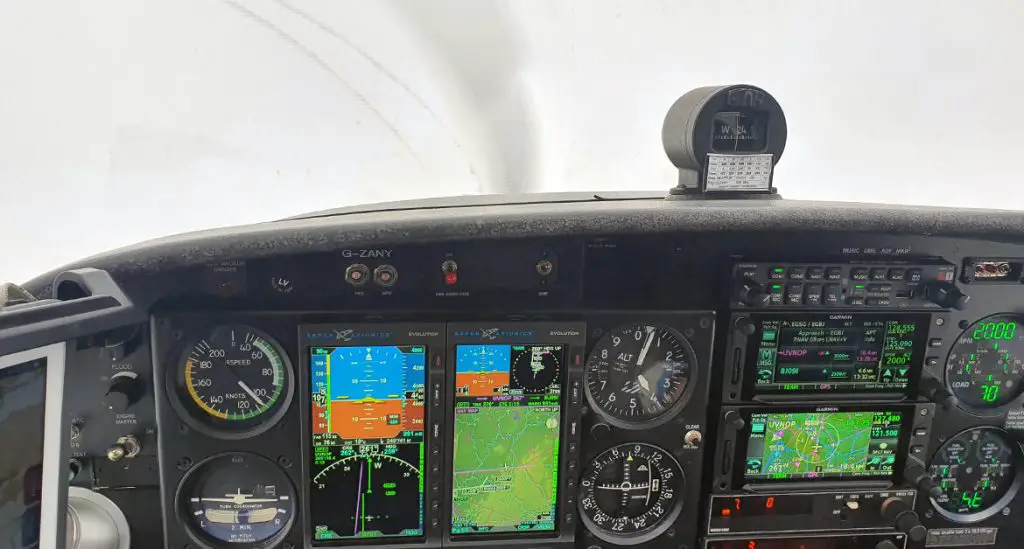
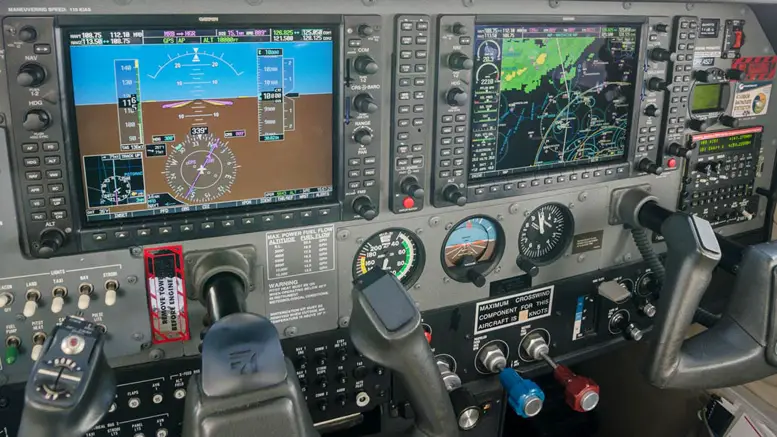
- In IFR, pilots fly by reference to instruments inside the cockpit, including:
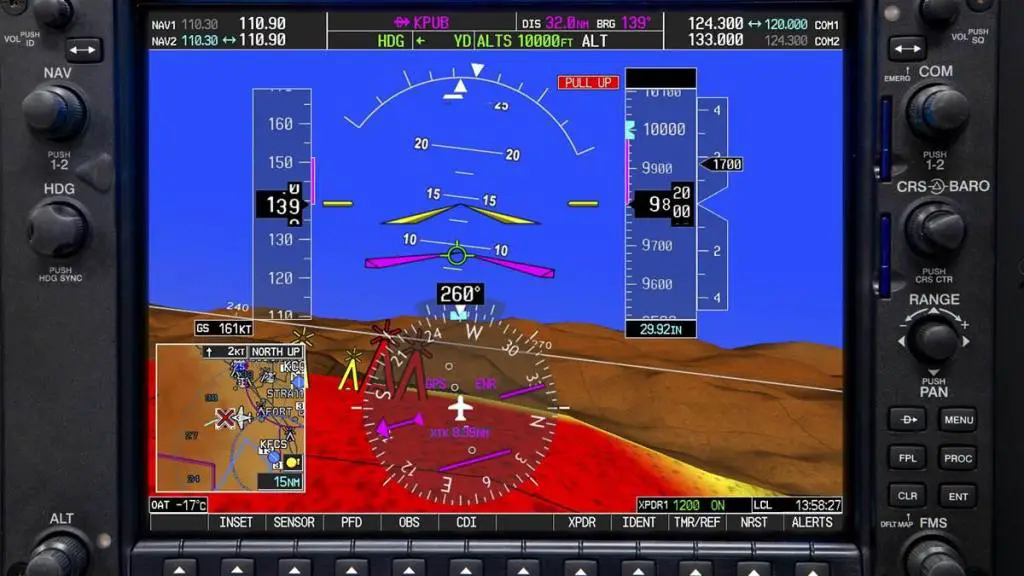
- Attitude Indicator: Displays the aircraft’s orientation relative to the horizon.
- Altimeter: Shows altitude above sea level.
- Heading Indicator: Displays the aircraft’s current heading.
- Airspeed Indicator: Displays the aircraft’s speed relative to the air.
- Vertical Speed Indicator (VSI): Shows the rate of climb or descent.
- Navigation Instruments: Such as GPS, VOR (VHF Omnidirectional Range), and DME (Distance Measuring Equipment) for precise navigation.
2. Controlled Airspace and ATC (Air Traffic Control)
- Under IFR, pilots are in constant communication with ATC. Controllers provide clearances, route guidance, and separation from other aircraft. This ensures safety in busy or poor visibility conditions.
- ATC assigns specific routes, altitudes, and instructions to prevent collisions and ensure efficient traffic flow.
3. Flight Plan Requirements
- Pilots must file an IFR flight plan with ATC before departure. This plan outlines the intended route, waypoints, altitude, and estimated time en route.
- The flight plan provides controllers with essential information for tracking and managing the flight. If the aircraft deviates from its plan, ATC will intervene with updated instructions or vectors.
4. Weather Minimums
- IFR allows aircraft to fly in Instrument Meteorological Conditions (IMC), where weather conditions fall below the minimums required for Visual Flight Rules (VFR). IMC typically includes conditions such as:
- Cloud cover
- Fog or mist
- Heavy precipitation
- Low ceilings (low cloud altitude)
- Nighttime without adequate visual reference
- However, aircraft can also operate under IFR in clear weather, often referred to as VFR on top or IFR in Visual Meteorological Conditions (VMC).
5. Departure, Enroute, and Approach Phases
- IFR Departures: After takeoff, pilots follow specific instrument departure procedures (SID – Standard Instrument Departure) to ensure safe separation from terrain and other aircraft.
- Enroute: During the enroute phase, pilots follow airways or direct routes, maintaining assigned altitudes and headings provided by ATC. Navigation is primarily based on radio navigation aids (VOR, GPS, etc.) and ATC instructions.
- IFR Approaches: When nearing the destination, IFR pilots fly Standard Terminal Arrival Routes (STARs) and conduct an instrument approach to the airport, using aids like the Instrument Landing System (ILS), VOR, or RNAV/GPS to guide them safely to the runway, even in poor visibility.
6. Precision vs. Non-Precision Approaches
- Precision Approach: Provides both vertical and lateral guidance to a specific point on the runway (e.g., an ILS approach). These allow for more accurate landings in low-visibility conditions.
- Non-Precision Approach: Provides only lateral guidance (e.g., VOR or NDB approaches), requiring the pilot to descend at predetermined points until the runway is visible or a missed approach is initiated.
If you are interested you should read about The Difference Between ILS and MLS in Aviation

When Is IFR Necessary?
- Poor Weather Conditions: IFR is mandatory when weather conditions fall below VFR minimums, such as when flying in clouds, fog, or heavy rain.
- Class A Airspace: IFR is required in Class A airspace, which starts at 18,000 feet MSL and extends upward to 60,000 feet.
- Night Flying: While not always required, IFR is often preferred for flying at night due to reduced visual cues for navigation and terrain avoidance.
- Busy Airspace: In high-traffic areas, especially around major airports, IFR operations ensure safe and efficient aircraft separation and traffic management.
Advantages of IFR
- All-Weather Capability: IFR allows for flight in conditions where VFR flight is not possible, enabling more consistent and reliable scheduling, especially for commercial flights.
- Increased Safety: By relying on precise instrument readings and continuous ATC guidance, IFR reduces the risks of disorientation, spatial misjudgment, and collision in poor visibility or complex airspace.
- Access to Controlled Airspace: IFR provides access to higher altitude and controlled airspace, allowing for more direct routing and improved fuel efficiency for longer flights.
Disadvantages of IFR
- Complexity: IFR flying requires a higher level of skill, training, and certification, as well as the ability to manage more complex procedures and communications.
- Dependency on Instruments: If the instruments malfunction or are improperly interpreted, the pilot may be in danger, particularly when flying in IMC.
- ATC Reliance: IFR flights are heavily reliant on ATC clearances and instructions. In busy airspace, this can result in delays or route deviations.
IFR Certification and Training
To fly under IFR, pilots must obtain an instrument rating, which requires additional training beyond the private pilot’s license. Key areas of focus during IFR training include:
- Mastery of instrument scanning techniques.
- Understanding of IFR navigation systems (GPS, VOR, DME, NDB, etc.).
- Proficiency in flying approaches, departures, holding patterns, and enroute procedures.
- Emergency procedures in instrument conditions.
- Working with ATC and following clearances.
FAQs
1. What are Instrument Flight Rules (IFR)?
IFR refers to a set of regulations that govern flights conducted in weather conditions where pilots must rely on instruments rather than visual references. This includes flying through clouds, fog, or other conditions with low visibility.
2. When is IFR required?
IFR is required when:
- Weather conditions fall below VFR minimums (e.g., visibility under 3 miles or a ceiling below 1,000 feet).
- Operating in controlled airspace such as Class A above 18,000 feet.
- Conducting flights in busy airspace where ATC needs precise control over aircraft.
3. How does IFR differ from VFR?
- IFR: Relies on instruments for navigation and ATC guidance.
- VFR: Relies on visual references and requires clear weather conditions.
4. What equipment is required for IFR flights?
Aircraft must be equipped with:
- Gyroscopic instruments (attitude indicator, heading indicator).
- Altimeter and airspeed indicator.
- Navigation systems (e.g., VOR, GPS, or ILS).
- Communications equipment for ATC interaction.
5. What are the benefits of flying IFR?
- Enables flight in poor weather conditions.
- Provides precise navigation and guidance.
- Increases access to controlled airspace and busy airports.
- Enhances safety through ATC monitoring and separation from other aircraft.
6. What are IFR minimums?
IFR minimums define the lowest weather conditions (e.g., visibility, ceiling) under which an aircraft can legally operate using instruments. They vary based on the type of approach, airport, and aircraft certification.
7. What is an IFR flight plan?
An IFR flight plan is a detailed route submitted to ATC before departure, outlining the intended path, altitude, and alternate airport in case of emergencies. Filing is mandatory for IFR operations.
8. How is an IFR flight plan filed?
Pilots can file IFR flight plans through:
- Online tools like ForeFlight or 1800wxbrief.
- ATC clearance delivery via radio.
- Flight Service Stations (FSS).
9. What is an IFR clearance?
An IFR clearance is ATC authorization for a pilot to operate under IFR. It includes route, altitude, and instructions for departure, en route, and arrival phases.
10. What is a precision approach in IFR?
A precision approach provides lateral and vertical guidance to a runway. Examples include:
- Instrument Landing System (ILS).
- GLS (GPS Landing System).
11. What is a non-precision approach in IFR?
A non-precision approach provides only lateral guidance without vertical descent information. Examples include:
- VOR approach.
- RNAV (GPS) without LPV or VNAV.
12. What happens if a pilot loses communication under IFR?
Pilots follow standard lost communication procedures, such as continuing to the planned destination and descending at published altitudes, while squawking 7600 on the transponder.
13. Can a pilot switch from IFR to VFR mid-flight?
Yes, if weather conditions improve, a pilot can cancel IFR and continue under VFR, provided they are outside controlled airspace requiring IFR.
14. What is IFR en route navigation?
IFR en route navigation involves following predefined airways or direct GPS routes using navigation aids such as VORs, DME, or RNAV.
15. What is the role of ATC in IFR?
ATC monitors IFR flights to:
- Provide separation from other aircraft.
- Issue clearances for changes in altitude or heading.
- Assist in emergencies or deviations due to weather.
16. What is the purpose of IFR altitudes?
IFR altitudes ensure:
- Separation from terrain and obstacles.
- Adequate separation from other aircraft based on direction of flight (e.g., odd/even thousand-foot rules).
17. What is a holding pattern in IFR?
A holding pattern is a racetrack-shaped maneuver that keeps an aircraft in a specific location, often due to delays, traffic congestion, or weather conditions at the destination airport.
18. What is the difference between IFR and IMC?
- IFR (Instrument Flight Rules): Regulations and procedures.
- IMC (Instrument Meteorological Conditions): Actual weather conditions requiring IFR.
19. What is required for IFR certification as a pilot?
Pilots need an Instrument Rating, requiring:
- 40+ hours of instrument flight training.
- Knowledge of instrument navigation, procedures, and regulations.
- Passing a written and practical test.
20. Can all pilots fly IFR?
No, only pilots with an Instrument Rating and proficiency can operate under IFR.
21. What are alternate airports in IFR?
Alternate airports are designated in IFR flight plans as backups if the destination becomes unavailable due to weather or other factors.
22. What is the difference between departure and arrival procedures in IFR?
- Departure Procedures (DP): Predefined routes ensuring safe ascent and separation from terrain and traffic.
- Arrival Procedures (STAR): Predefined routes for efficient integration into terminal airspace.
23. What is a decision altitude in IFR?
A decision altitude (DA) is the altitude at which a pilot must decide to either continue descending to land or execute a missed approach if the runway is not visible.
24. What is a missed approach?
A missed approach is a procedure executed when a pilot cannot land safely due to weather, obstacles, or traffic. It ensures the aircraft climbs to a safe altitude and follows a predefined path.
25. What is the significance of Minimum En Route Altitudes (MEA) in IFR?
MEAs guarantee:
- Obstacle clearance.
- Adequate navigation signal coverage.
26. What tools help pilots during IFR?
- Electronic Flight Bags (EFBs) like ForeFlight.
- Advanced avionics like Garmin G1000.
- Autopilot systems integrated with navigation instruments.
27. Can drones operate under IFR?
Yes, with proper certification, drones can operate under IFR, especially for commercial applications like inspections or deliveries in low-visibility conditions.
28. How do pilots transition from VFR to IFR in flight?
A pilot can request an IFR clearance from ATC mid-flight, provided they are trained, the aircraft is equipped, and the airspace allows it.
29. What is IFR fuel planning?
IFR fuel planning ensures sufficient fuel for:
- The planned route.
- Diversion to an alternate airport.
- 45 minutes of reserve fuel.
30. How do weather conditions impact IFR?
Severe weather like thunderstorms, turbulence, and icing require careful planning and ATC coordination, even under IFR.


 Aviator Tells
Leave a comment