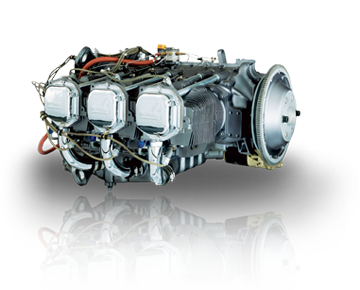
The Lycoming O-540 is a family of horizontally opposed, six-cylinder engines that are widely used in general aviation.
Known for their reliability, durability, and performance, the O-540 series engines power a variety of aircraft, from single-engine planes to helicopters. This guide provides an in-depth look at the Lycoming O-540, including its history, design, specifications, variants, and applications.
History and Development
The Lycoming O-540 was introduced in the 1950s as an evolution of Lycoming’s successful line of horizontally opposed engines. It was designed to provide more power than the four-cylinder O-360, making it suitable for larger and heavier aircraft.
Over the decades, the O-540 has been refined and adapted to meet the needs of various aircraft and operating conditions.

Lycoming O-540 Design and Features
The Lycoming O-540 engine features a robust design that balances power output and reliability. Key design elements include:
- Configuration: Horizontally opposed six-cylinder
- Cooling System: Air-cooled
- Displacement: 541.5 cubic inches (8.87 liters)
- Fuel System: Available in carbureted and fuel-injected versions
- Ignition System: Dual magnetos for redundancy and reliability
- Lubrication System: Wet sump
Lycoming O-540 Specifications
Here are the general specifications for the Lycoming O-540 engine:
| Specification | Details |
|---|---|
| Manufacturer | Lycoming Engines |
| Model | O-540 Series |
| Configuration | Horizontally opposed 6-cylinder |
| Displacement | 541.5 cubic inches (8.87 liters) |
| Bore x Stroke | 5.125 in x 4.375 in (130.2 mm x 111.1 mm) |
| Compression Ratio | 7.0:1 to 9.0:1 (varies by model) |
| Power Output | 235 hp to 350 hp (175 kW to 261 kW) |
| Fuel Type | Aviation gasoline (100LL) |
| Fuel System | Carbureted or fuel-injected |
| Ignition System | Dual magnetos |
| Weight | 380 lbs to 420 lbs (dry weight) |
If you are interested you should read about Lycoming O-290

Lycoming O-540 Performance and Variants
The Lycoming O-540 series includes several variants, each tailored to meet specific performance and operational requirements:
- O-540-A1A: Standard version, producing 235 hp, typically carbureted.
- IO-540-C4B5: Fuel-injected version producing 260 hp, commonly used in high-performance aircraft.
- TIO-540-AE2A: Turbocharged and fuel-injected version producing 350 hp, used in aircraft requiring high-altitude performance.
- HIO-540-D4A5: Helicopter version producing 290 hp, with modifications for vertical flight performance.
Applications
The versatility of the Lycoming O-540 engine has led to its widespread use in a variety of aircraft, including:
- Piper PA-32 Cherokee Six / Saratoga: Known for its spacious cabin and payload capacity.
- Cessna 206 Stationair: A popular utility aircraft used for passenger and cargo transport, as well as skydiving.
- Beechcraft Bonanza: High-performance aircraft favored for its speed and range.
- Helicopters: Various models including the Bell 205 and Robinson R44.
- Experimental and Homebuilt Aircraft: Many custom aircraft utilize the O-540 for its reliability and power.
Maintenance and Performance Upgrades
Maintaining the Lycoming O-540 engine involves regular inspections and servicing to ensure longevity and performance. Key maintenance tasks include:
- Oil Changes: Regular oil changes are essential for engine health.
- Spark Plug Replacement: Ensuring efficient ignition and combustion.
- Magneto Inspection and Servicing: Crucial for reliable ignition.
- Fuel System Maintenance: Keeping the carburetor or fuel injection system clean and functional.
- Cylinder Inspections: Checking for wear and proper operation.
For those looking to enhance performance, various aftermarket parts and upgrades are available:
- High-Compression Pistons: Increase power output by raising the compression ratio.
- Electronic Ignition Systems: Improve reliability and efficiency compared to traditional magnetos.
- Lightweight Starters and Alternators: Reduce weight and improve starting performance.
- Exhaust Systems: Performance exhaust systems can enhance power output and reduce weight.
- Fuel Injection Conversions: Converting from carburetion to fuel injection can improve fuel efficiency and throttle response.

Lycoming O-540 Overhaul Cost and Time
Overhauling a Lycoming O-540 engine is a significant investment. The cost and time required for an overhaul can vary based on several factors:
- Cost:
- Professional Overhaul Shop: $25,000 to $40,000
- In-House Overhaul (if applicable): $20,000 to $35,000 (lower labor costs but requires specialized tools and expertise)
- Time:
- Professional Overhaul Shop: 6 to 12 weeks
- In-House Overhaul: 8 to 16 weeks (depending on availability of tools, parts, and expertise)
Lycoming O-540 Price
New Engines
- New Lycoming O-540: $50,000 to $75,000
Rebuilt Engines
- Factory-Rebuilt O-540: $35,000 to $50,000
- Rebuilt engines are disassembled, inspected, and reassembled with new or reconditioned parts to meet or exceed original specifications.
Overhauled Engines
- Professionally Overhauled O-540: $25,000 to $40,000
- Overhauled engines are disassembled, inspected, repaired, or replaced with necessary parts and then reassembled to return to service.
Used Engines
- Used Lycoming O-540: $15,000 to $30,000
- Used engines are sold as-is and may require additional work or an overhaul to reach optimal condition.

Factors Influencing Price
Several factors can influence the price of a Lycoming O-540 engine, including:
- Specific Model and Variant: Different variants of the O-540 series have different power outputs and features.
- Condition: New, rebuilt, or overhauled engines have varying levels of reliability and remaining service life.
- Accessories and Modifications: Engines with upgraded accessories or modifications (e.g., electronic ignition systems, lightweight components) may command higher prices.
- Documentation and Warranty: Engines with complete maintenance records and warranties are typically more valuable.
Additional Costs
- Shipping and Handling: $200 to $500 depending on location and shipping method.
- Installation: Labor costs for installation can vary widely but generally range from $1,000 to $5,000.
- Accessories: Additional costs for components such as exhaust systems, starters, alternators, and fuel systems if not included.
FAQs
1. What is the Lycoming O-540 engine?
The Lycoming O-540 is a six-cylinder, air-cooled, horizontally opposed piston engine widely used in general aviation. It is renowned for its durability, versatility, and reliable performance across a variety of aircraft types, including single-engine and twin-engine planes.
2. What does the “O-540” designation mean?
- O: Opposed – The engine’s cylinders are arranged in a horizontally opposed configuration.
- 540: The total engine displacement in cubic inches, equivalent to approximately 8.85 liters.
3. What is the horsepower rating of the Lycoming O-540?
The Lycoming O-540 is available in different variants, with horsepower ratings ranging from 235 HP to 350 HP, depending on the specific model and application.
4. What are some aircraft models that use the Lycoming O-540?
Popular aircraft equipped with the O-540 include:
- Piper PA-32 Cherokee Six
- Cessna 182 Skylane (Turbocharged variant)
- Robinson R44 helicopter
- Beechcraft Duchess (twin-engine variant with two O-540s)
5. How much does a new Lycoming O-540 cost?
A new Lycoming O-540 engine typically costs between $65,000 and $90,000, depending on the specific variant and any additional features or modifications.
6. What is the price of an overhauled Lycoming O-540?
An overhauled O-540 engine generally costs $35,000 to $55,000, depending on the condition, service provider, and the extent of the overhaul.
7. What is the Time Between Overhaul (TBO) for the Lycoming O-540?
The recommended TBO for the O-540 is typically 2,000 hours, although this can vary depending on the specific model and operating conditions.
8. How does the Lycoming O-540 perform in terms of fuel efficiency?
Fuel consumption varies depending on the variant and operating conditions but typically ranges from 13 to 17 gallons per hour (GPH) during cruise settings.
9. What type of fuel does the Lycoming O-540 use?
The O-540 primarily uses 100LL (low-lead) aviation gasoline, but some variants are compatible with unleaded fuels under certain conditions.
10. What are the dimensions of the Lycoming O-540?
- Length: Approximately 33.4 inches
- Width: Approximately 33.1 inches
- Height: Approximately 24.8 inches
11. How much does the Lycoming O-540 weigh?
The dry weight of the engine is approximately 380-430 lbs, depending on the specific model.


Leave a Reply