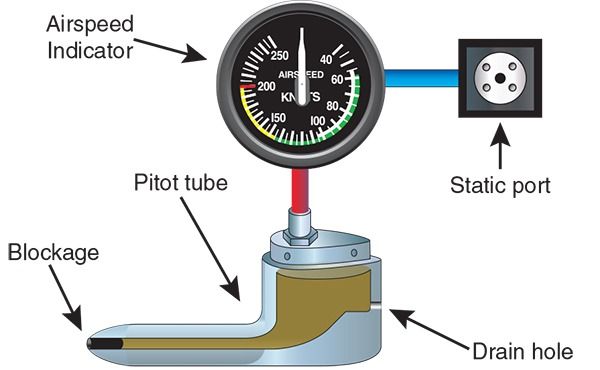
Pitot Blockage
The airspeed indicator is the only instrument affected by a Pitot tube Blockage.
There are two types of pitot blockage that can occur:
1- If the ram air inlet clogs but the drain hole remains open
The pressure in the line to the airspeed indicator vents out the drain hole, causing the airspeed indicator to drop to zero. This is typically occurs when ice forms over the ram air inlet.
2- When both the ram air inlet and drain hole become clogged trapping the air pressure in the line
In level flight, the airspeed indicator typically remains at its present indication, but no longer indicates changes in airspeed. If the static port remains open, the indicator reacts as an altimeter, showing an increase in airspeed when climbing and a decrease in speed when descending. This is opposite the normal way the airspeed indicator behaves, and can result in inappropriate control inputs because you will observe runaway airspeed as you climb and extremely low airspeed in a descent. In addition, large power changes during level flight will not result in any variations in airspeed. This type of failure can be very hazardous because it is not at all obvious when in occurs.
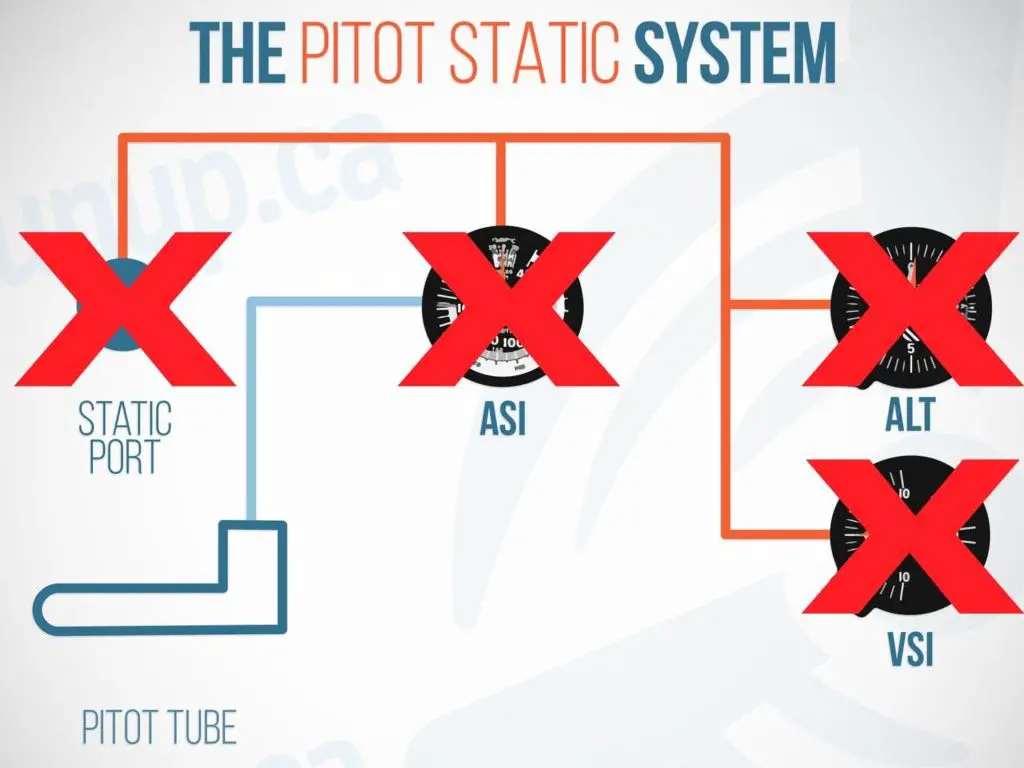
Static Blockage
If the static system becomes clogged, the airspeed indicator continues to react to changes in airspeed, because ram air pressure is still being supplied by the pitot tube, but the reading are not be correct.
When you are operating above the altitude where the static port became clogged, the airspeed reads lower than it should. Conversely, when you operate at lower altitude, a faster than actual airspeed is displayed due to relatively low static pressure trapped in the system.
The amount of error is proportional to the distance from the altitude where the static system became clogged.
“The greater the difference, the greater the error”.
If you are interested you should read about the Types of Altitude in Aviation
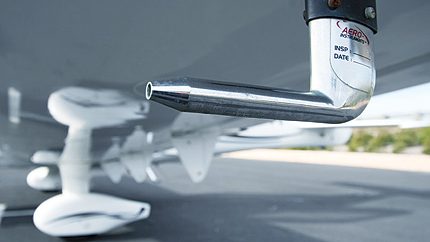
Alternate Static Source
In many aircraft, an alternate static source is provided as a backup for the main static source. In non-pressurized aircraft, the alternate source usually is located inside the aircraft cabin. Due to the slipstream, the pressure inside the cabin is usually less than that of outside air.
Normally, when you select the alternate static source, the altimeter reads a little higher and the airspeed a little faster than normal, and the vertical speed indicator shows a momentary climb.
However, this is not always the case. Your airplane’s POH (Pilot’s operating handbook) might contain information regarding variations in airspeed and altimeter readings due to changes in airplane configurations and use of the alternate static source. In the case of a pressurized aircraft with a static line leak inside the pressurized compartment, the altimeter reads lower than the actual flight altitude, due to the increased static pressure.
The airspeed might also read lower than it should, and the vertical speed indicator might indicate a momentary descent.


 Aviator Tells
Leave a comment